

If you have a bag of Maseca sitting in your pantry, you are surprisingly close to a plate of warm, homemade gorditas. The dough is simple, the cooking is quick, and you can fill them with just about anything that sounds good.
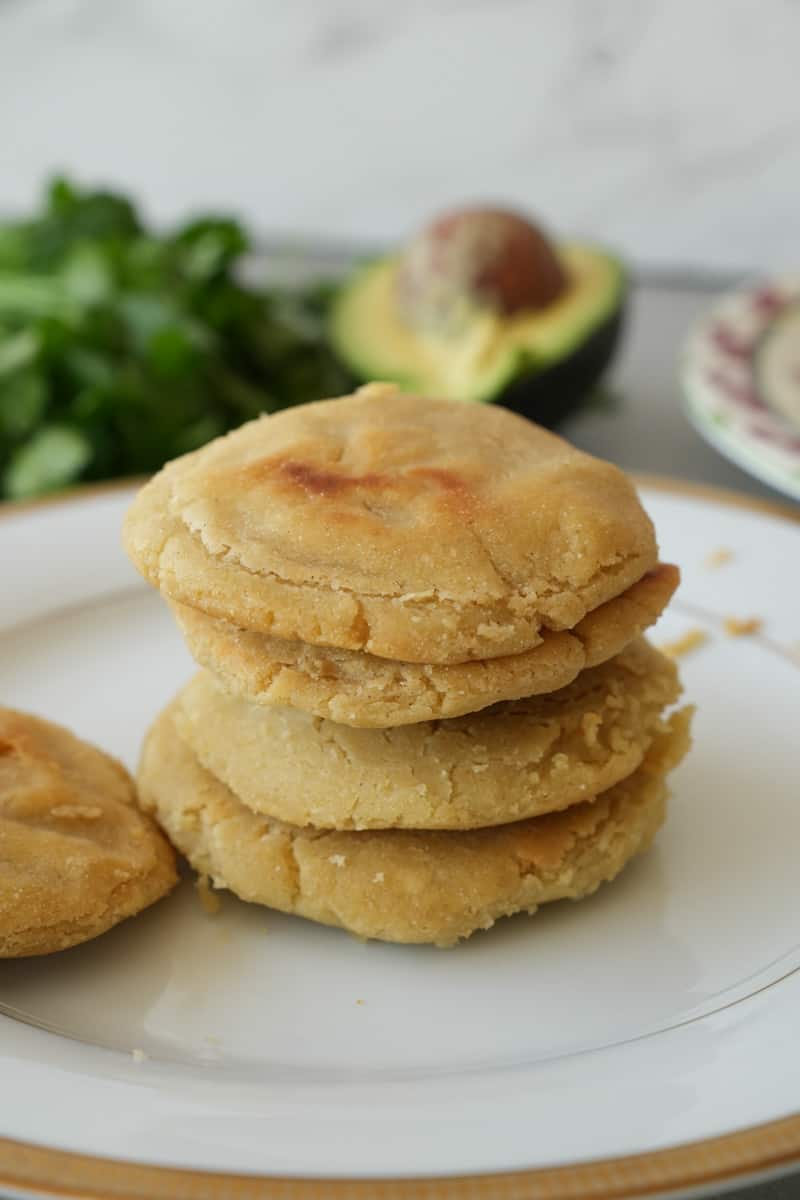
This recipe shows you how to make gorditas with Maseca on a skillet or comal. You can serve them soft and lightly crisp from the griddle or give them a quick fry for an extra-crunchy exterior.
The most important part is getting the dough consistency right. It should feel soft and moist without sticking to your hands. Once you know what the masa should feel like, the rest is easy.
Jump to:
- Why You’ll Love This Recipe
- What Are Gorditas?
- Ingredients for Maseca Gorditas
- How to Make Gorditas With Maseca
- Pan-Cooked or Fried Gorditas
- Top Tips for Better Gorditas
- Gordita Filling Ideas
- Substitutions
- Variations
- What to Serve With Gorditas
- Make-Ahead Instructions
- Storage and Reheating
- Frequently Asked Questions
- How to Make Gorditas With Maseca
Why You’ll Love This Recipe
- You only need a few basic ingredients to make the gordita shells.
- The dough is naturally easy to shape and does not require yeast or rising time.
- You can cook the gorditas on a griddle or fry them for a crispier finish.
- They work with leftover meat, beans, cheese, vegetables, or almost any taco filling.
- The shells can be made ahead and reheated when you are ready to eat.
What Are Gorditas?
Gorditas are thick corn masa cakes that are cooked until golden, split open, and filled. The word “gordita” translates roughly to “little fat one,” which makes sense when you compare them with thin corn tortillas.
Unlike a tortilla, a gordita is thick enough to slice and open into a pocket. The outside develops toasted spots and a lightly crisp texture, while the inside stays soft enough to hold fillings.
Mexican gorditas can be prepared in several ways depending on the region and the cook. Some are cooked entirely on a comal, while others are fried. This recipe includes both options.
Ingredients for Maseca Gorditas
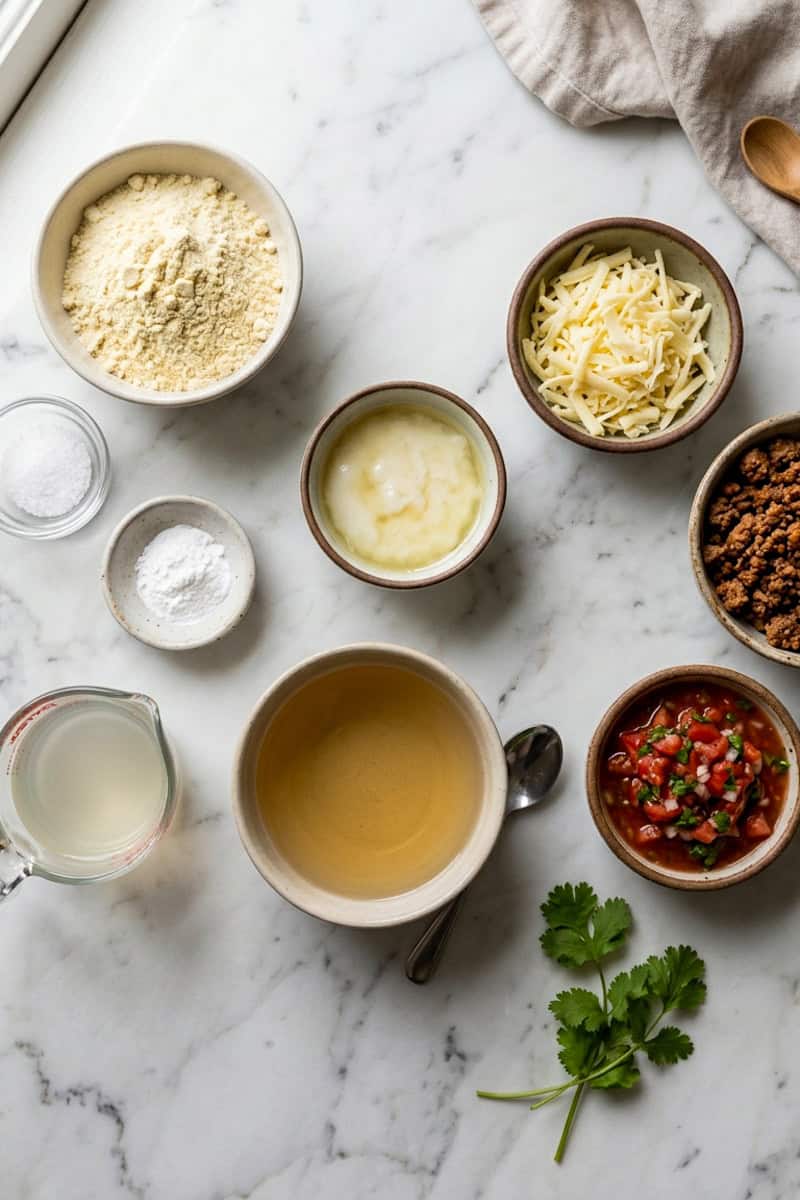
Maseca: Use the instant corn masa flour intended for tortillas. Do not substitute cornmeal or ordinary corn flour; they absorb water differently and will not create the same dough.
Warm water: Warm water hydrates the masa harina more evenly and helps create a soft, workable dough.
Salt: A little salt seasons the shells so they taste good before you add any fillings.
Baking powder: This is optional, but a small amount can make the gorditas slightly lighter and softer.
Neutral oil or melted lard: Also optional, but it adds tenderness and a little richness to the dough.
Frying oil: You only need this if you want to fry the gorditas after cooking them on the griddle.
See recipe card for quantities.
How to Make Gorditas With Maseca

Combine the Maseca, salt, and baking powder in a large bowl. Slowly pour in the warm water while mixing with your hand or a sturdy spoon.
Add the oil or melted lard, if using, and knead the masa in the bowl for about two minutes. It should feel smooth, soft, and slightly springy.
If the dough cracks when you squeeze it, knead in more warm water one tablespoon at a time. If it sticks heavily to your hands, add a small amount of Maseca. Cover the bowl with a clean, damp kitchen towel and let the masa rest for 10 minutes.
Masa harina continues absorbing water as it rests, so check it again before shaping. If it feels dry, knead in another splash of warm water.

Divide the dough into eight equal portions and roll each portion into a smooth ball.
Place one ball between two pieces of plastic cut from a zip-top or produce bag. Gently press it with a tortilla press, a flat-bottomed pan, or your hands.
Each gordita should be about four inches wide and approximately ⅓ inch thick. They need to be noticeably thicker than corn tortillas but not so thick that the centers remain raw.
Smooth any cracks around the edges with a damp finger.

Heat a comal or heavy skillet over medium heat. The pan should be hot before the first gordita goes in, but it should not be smoking.
Cook the gorditas in batches for about three to four minutes on the first side. Flip and cook for another three to four minutes. Turn them again as needed until both sides have toasted brown spots and the centers feel cooked and firm.
Transfer the cooked gorditas to a towel-lined basket or plate and keep them covered. The trapped steam helps keep them soft enough to split.

While each gordita is still warm, carefully cut around one side with a small sharp knife to create a pocket. Leave part of the edge attached so the gordita opens like a pita instead of separating into two pieces.
Add your favorite fillings and serve immediately.
Pan-Cooked or Fried Gorditas
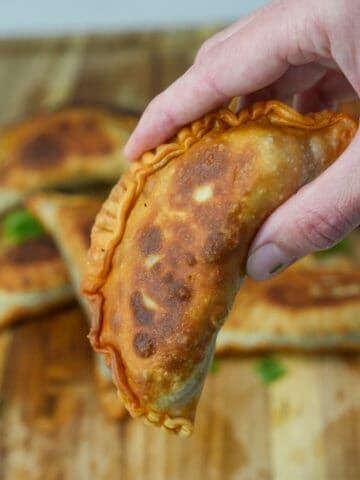
You do not have to deep-fry gorditas. The pan-cooked version is soft inside with a lightly crisp, toasted exterior and is perfect for everyday meals.
For crispier fried gorditas, cook the shells on the griddle first. Heat about ½ inch of neutral oil to 350°F, then fry each cooked gordita for approximately 45 to 60 seconds per side. Transfer to paper towels or a wire rack to drain.
Split them while they are still warm, but be careful—the inside may release hot steam.
Top Tips for Better Gorditas
The best test for masa is the edge test. Press a small piece of dough into a thick disk. If the edges split into large cracks, the dough needs more water. If the disk sticks to the plastic and loses its shape, it is too wet.
A few other things make a noticeable difference:
- Keep unused dough covered while shaping the gorditas.
- Use warm water, not cold water.
- Do not press the gorditas as thin as tortillas.
- Cook over medium heat so the outside does not burn before the center cooks.
- Keep cooked gorditas wrapped in a towel until you are ready to split them.
- Open the pockets while they are warm. Cold gorditas are more likely to crack.
Gordita Filling Ideas
Gorditas are perfect for transforming leftovers into a completely different meal. Some of my favorite fillings include:
- Carnitas
- Cochinita pibil
- Chicken tinga
- Carne asada
- Picadillo with potatoes
- Chorizo and potatoes
- Beef tinga
- Birria
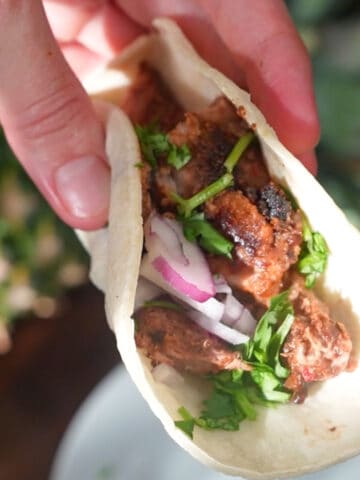
Add refried beans, shredded cheese, avocado, salsa, cilantro, or a squeeze of lime to finish them.

Substitutions
Maseca: Another brand of instant nixtamalized corn masa flour can work, but the amount of water may change slightly.
Lard: Replace it with avocado oil, vegetable oil, or another neutral cooking oil. You can also leave it out.
Baking powder: Leave it out for a slightly denser, more traditional corn masa texture.
Water: Plain warm water works well, but warm broth can add extra flavor. Check the salt level if your broth is already seasoned.
Variations
Cheese-filled gorditas: Place a small amount of shredded cheese between two thin pieces of masa, seal the edges, and cook until the cheese melts and the shell is golden.
Bean-stuffed gorditas: Enclose a spoonful of thick refried beans inside the masa before flattening. Avoid using runny beans because they make the edges difficult to seal.
Mini gorditas: Divide the dough into 12 to 16 portions for smaller appetizer-size gorditas.
Spicy masa: Knead finely chopped jalapeño, ground chile, or a little chile powder into the dough.
Blue corn gorditas: Substitute blue corn masa harina and adjust the water as needed.
What to Serve With Gorditas
Gorditas are hearty enough to enjoy on their own, but I love serving them with a few fresh and flavorful sides. Try them with my Traditional Guacamole and Chile de Arbol Salsa for dipping or spooning on top.
For a complete meal, pair your gorditas with Mexican Corn (Elote Mexicano), Chipotle Black Beans, or Chipotle Rice. For something lighter, my Mexican Nopales Salad or Avocado Tomato Salad adds a refreshing contrast.
To drink, serve them with a Mango Jalapeño Margarita, Tamarind Margarita, or this alcohol-free Margarita Mocktail.
Make-Ahead Instructions
You can mix and shape the masa several hours ahead. Stack the uncooked gorditas between small pieces of parchment or plastic, cover tightly, and refrigerate.
Let them sit at room temperature for about 15 minutes before cooking. Check the edges and smooth on a little water if the dough has dried during storage.
You can also cook the shells one day ahead. Cool them completely, refrigerate them in an airtight container, and reheat them before splitting.
Storage and Reheating
Refrigerator: Store unfilled gordita shells in an airtight container for up to four days.
Freezer: Separate the shells with parchment paper and freeze them in a freezer-safe container for up to two months. Thaw overnight in the refrigerator.
Skillet: Reheat over medium-low heat for one to two minutes per side. This gives them the best texture.
Oven: Wrap the gorditas in foil and heat at 350°F until warmed through.
Microwave: Wrap them in a damp paper towel and microwave briefly. This softens them quickly, although they will not be as crisp.
Store fillings separately whenever possible so the shells do not become soggy.
Frequently Asked Questions
What kind of dough is used for gorditas?
Corn gorditas are made with masa, a dough prepared from nixtamalized corn. Maseca is an instant masa harina that becomes fresh masa when mixed with water.
How thick should gorditas be?
Aim for approximately ⅓ inch thick. They should be thicker than tortillas but thin enough to cook completely in the center.
Why are my gorditas cracking?
The most common reason is dry masa. Knead in warm water one tablespoon at a time until the dough feels soft and the edges remain mostly smooth when pressed.
Cracking can also happen when the dough is left uncovered or when cooked gorditas cool before being split.
How do you get gorditas to puff?
Properly hydrated dough, an evenly heated pan, and consistent thickness all help. Some gorditas puff dramatically, while others only develop a small pocket. They can still be split and filled even if they do not inflate completely.
Do gorditas have to be deep-fried?
No. Gorditas can be cooked entirely on a dry comal or skillet. Frying is optional and gives the shells a crunchier exterior.
What are the best gordita fillings?
Popular fillings include carnitas, shredded chicken, carne asada, chorizo and potatoes, refried beans, cheese, picadillo, and chicharrón in salsa. Use fillings that are flavorful but not excessively wet.


How to Make Gorditas With Maseca
- Total Time: 45 minutes
- Yield: 8 gorditas 1x
- Diet: Gluten-Free
Description
Soft, thick corn gorditas made with Maseca and cooked on a griddle. Serve them pan-cooked or fry them briefly for a crispier shell, then split and add your favorite fillings.
Ingredients
- 2 cups Maseca instant corn masa flour
- 1 teaspoon fine sea salt
- ½ teaspoon baking powder, optional
- 1½ cups warm water, plus more as needed
- 1 tablespoon neutral oil or melted lard, optional
- Neutral oil for frying, optional
- Desired fillings and toppings
Instructions
- Combine the Maseca, salt, and baking powder in a large mixing bowl.
- Slowly add the warm water while mixing. Add the oil or lard, if using, and knead for about two minutes.
- Cover the dough with a damp towel and rest for 10 minutes. Add more warm water one tablespoon at a time if the dough cracks when pressed.
- Divide the dough into eight portions and roll each into a smooth ball.
- Press each ball between two pieces of plastic into a disk approximately four inches wide and ⅓ inch thick. Smooth cracked edges with a damp finger.
- Heat a comal or heavy skillet over medium heat.
- Cook each gordita for three to four minutes per side, turning again as needed, until toasted outside and cooked through.
- Keep the cooked gorditas covered with a towel.
- While warm, cut into one side of each gordita to create a pocket.
- Fill and serve. For a crispier shell, fry the cooked gorditas in 350°F oil for 45 to 60 seconds per side before splitting.
Notes
- Masa that cracks needs additional water.
- Keep the dough covered while working.
- Split the gorditas while warm.
- Water absorption varies slightly by brand and storage conditions.
- Prep Time: 20 minutes
- Cook Time: 25 minutes
- Category: Dinner
- Method: Frying
- Cuisine: Mexican
paulina fuentes
This is just the way my abuela would make gorditas.
Maxine Dubois
I love it! My mom made them for us all the time too!
Samantha
Is it just me or was there some kind of oil in the pan in the video which is not mentioned in the recipe?
Maxine Dubois
Hi Samantha!
Yes, and it is totally optional. Some people prefer not to add extra oil, and really all you need is the warm skillet.