

This French garlic and herb compound butter is made with salted butter, fresh parsley, garlic, shallots, lemon zest, white pepper, and anise seeds. It’s rich, savory, and basically an instant sauce for turkey, steak, chicken, fish, roasted vegetables, and warm bread.

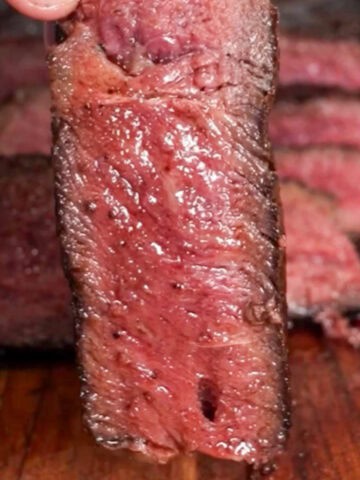
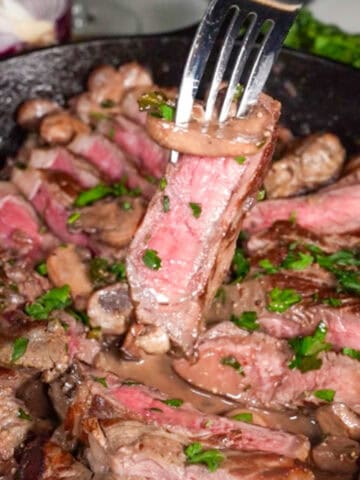
I originally served this compound butter over a thin, pan-seared steak, but the butter is really the recipe here. You can make it ahead, keep it in the refrigerator, and slice off a round whenever dinner needs a little help.
It also makes such a good compound butter for turkey. Spread it underneath the skin before roasting so the meat stays flavorful and the outside gets beautifully browned. And obviously, save a little clean butter for the table.
Why You’ll Love This Recipe
- You can make it ahead: Mix and shape the butter in advance, then keep it chilled until you need it.
- It works with almost anything: Use it for turkey, steak, chicken, seafood, vegetables, potatoes, pasta, or bread.
- It creates an instant sauce: Put a slice on hot meat or vegetables and let the heat do the rest.
- The flavor is more interesting than standard garlic butter: Shallots, lemon zest, white pepper, and anise give this compound herb butter a subtle French-inspired flavor.
- It freezes well: Make the full batch now and slice off portions as needed.
What Is Compound Butter?
Compound butter is softened butter mixed with herbs, garlic, spices, citrus zest, or other flavorful ingredients. The mixture is usually shaped into a log, chilled, and sliced into rounds.
You can use it as a finishing butter by placing a slice over hot food, or use it before cooking. For turkey, I like spreading it underneath and over the skin before roasting. For steak, add it after cooking while the steak rests.
The basic idea is very simple: butter plus flavorful things. That’s it.

Garlic and Herb Compound Butter Ingredients
You’ll only need a few ingredients to make this recipe. The exact measurements are listed in the recipe card below. Here’s what you’ll need:
Salted French butter: Since butter is the base of the recipe, use one you really like. French butter is especially rich and creamy, but any good-quality salted butter will work. Make sure it is properly softened before mixing.
Flat-leaf parsley: Fresh parsley gives the butter color and a clean, herby flavor. Flat-leaf parsley has more flavor than curly parsley and is easier to chop finely.
Garlic: I use three fresh garlic cloves. Mince or grate them very finely so you don’t end up with large pieces of raw garlic in the butter.
Shallots: Shallots add a mild onion flavor without completely taking over. Dice them as finely as possible so they mix evenly into the softened butter.
Lemon zest: Lemon brightens everything without adding extra liquid. Only grate the yellow outer layer of the peel—the white pith underneath is bitter.
Anise seeds: These add a subtle licorice-like flavor that makes this butter a little different from a standard garlic herb compound butter. Lightly crushing the seeds helps release their flavor.
Ground white pepper: White pepper adds gentle heat and blends into the butter without leaving black specks everywhere.
See recipe card for quantities.
How to Make Garlic and Herb Compound Butter
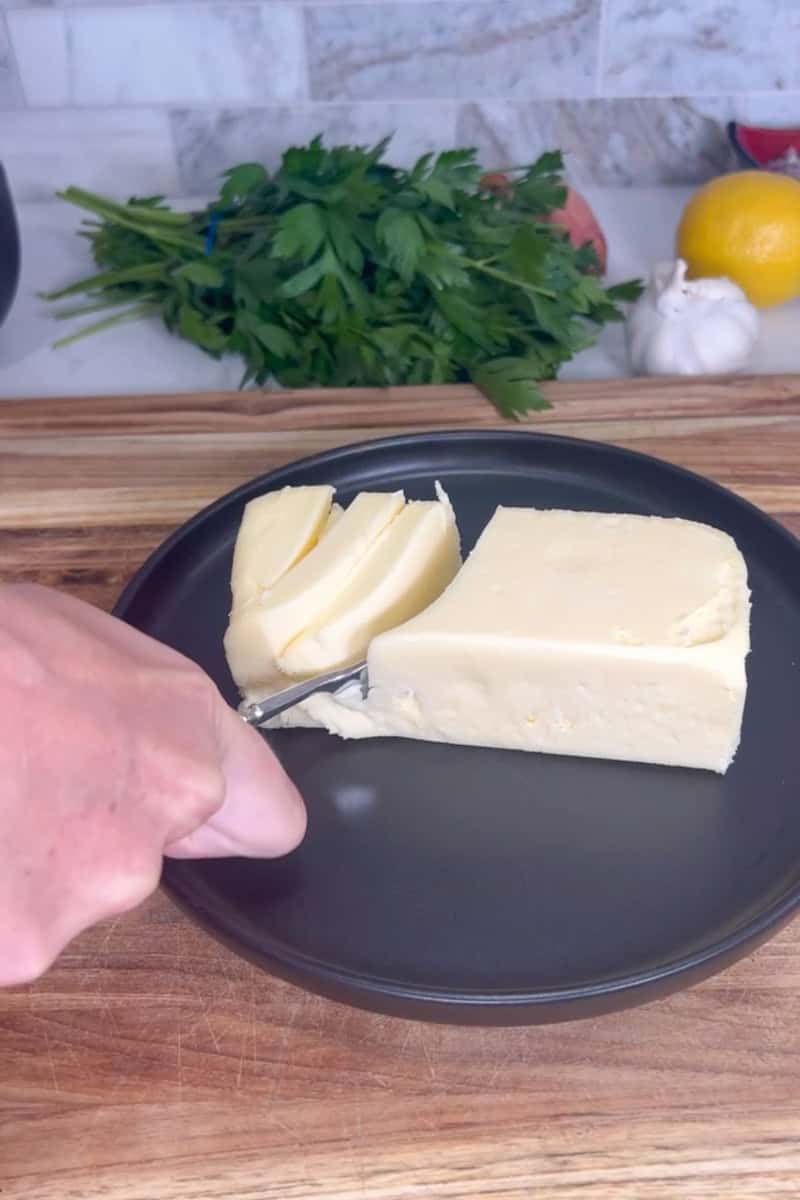
Leave the butter at room temperature until it is soft enough to mix easily. It should give when pressed but should not be oily or melted.
If the butter is still cold, the herbs and aromatics won’t distribute evenly. If it is melted, the ingredients may sink instead of staying suspended throughout the butter.
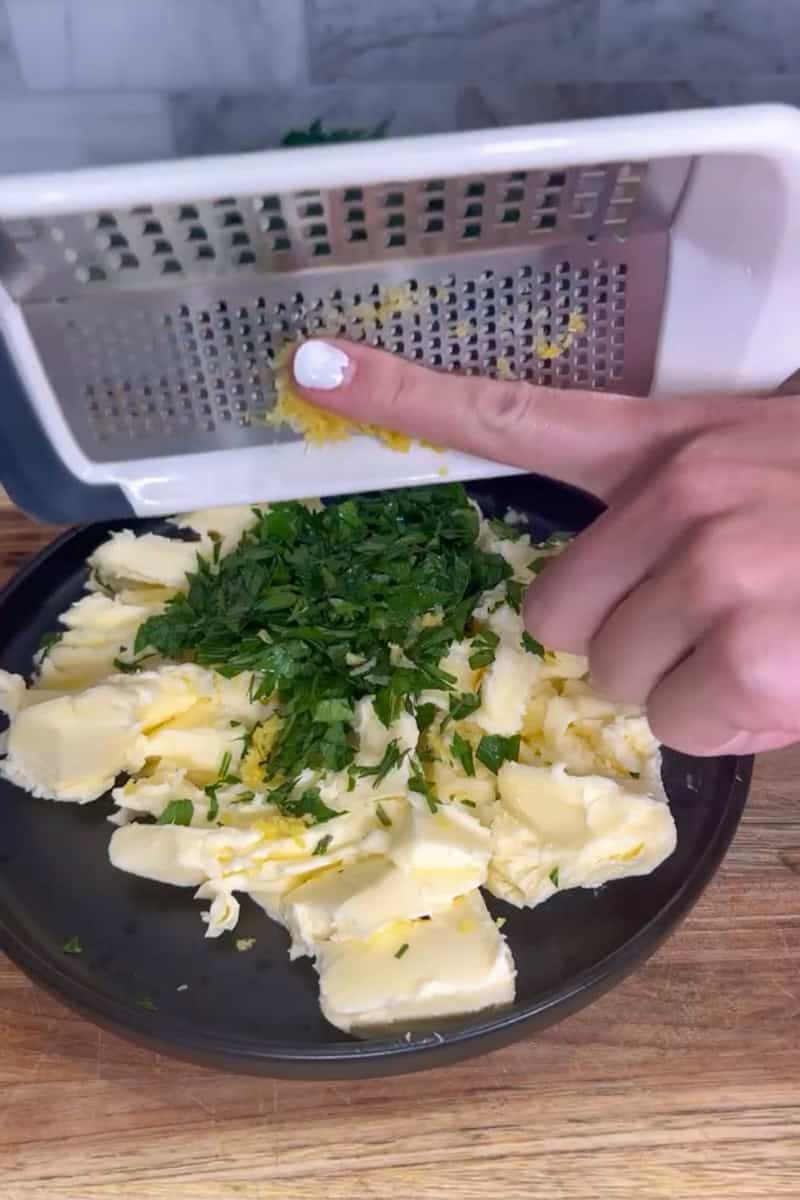
Finely chop the parsley and shallots. Mince or grate the garlic, zest the lemon, and lightly crush the anise seeds.
Really chop the shallots finely here. Large pieces make the finished butter harder to slice and can fall off whatever you put it on.
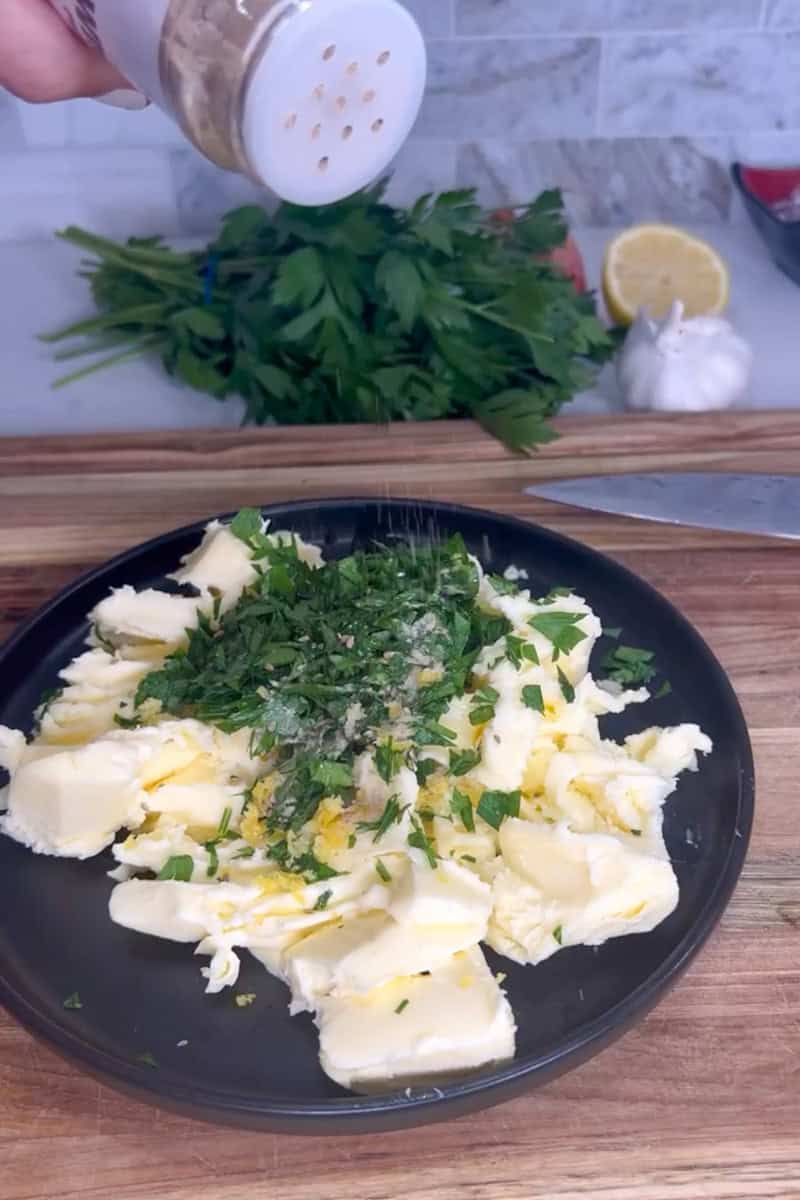
Add the softened butter, parsley, garlic, shallots, lemon zest, anise seeds, and white pepper to a bowl. Mix until everything is evenly distributed.
You can taste a tiny amount and adjust the seasonings if needed. Since the butter is salted, I don’t add extra salt automatically.
Spoon the butter onto parchment paper or plastic wrap. Fold the paper or wrap over the butter and roll it into a compact log or ball.
Twist the ends closed, then refrigerate the butter until firm enough to slice, about one hour.
Cut the chilled butter into rounds and place one over hot turkey, steak, chicken, fish, or vegetables. Give it a minute to soften and melt before serving.
Top Tip
Make sure the butter is softened, not melted. Properly softened butter holds the herbs, garlic, and shallots evenly, which means every slice has a little of everything in it.
How to Use Compound Butter for Turkey
This recipe works especially well as a compound butter for turkey because it can season both the meat and the skin.
Before roasting, gently loosen the turkey skin over the breasts and thighs with your fingers. Spread some of the softened butter underneath the skin, distributing it as evenly as possible. Rub more butter over the outside of the turkey before it goes into the oven.
Keep any butter that has touched the raw turkey separate from the rest. If you want compound butter at the table, set aside a clean portion before you begin working with the turkey.
For a smaller turkey breast, use only as much butter as needed to coat the meat and skin. Save the rest for vegetables, bread, or another dinner.
How to Use Compound Butter for Steak
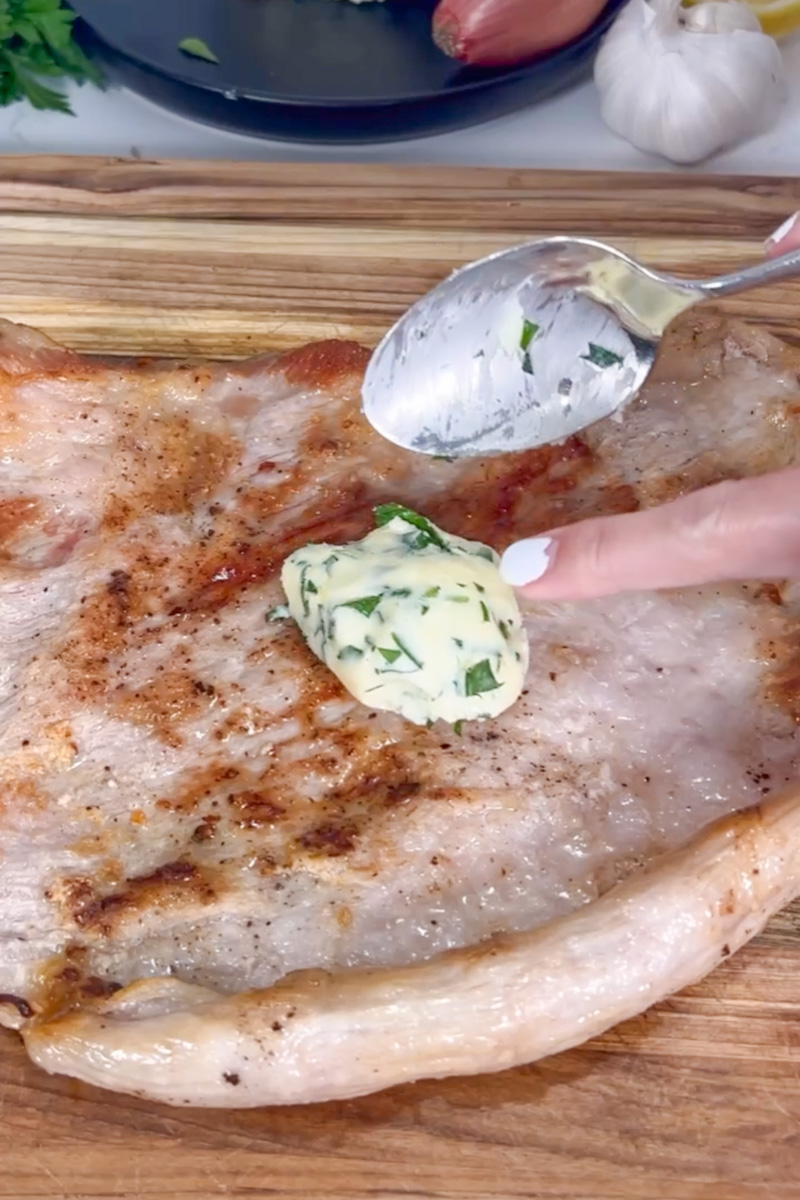
Season and cook your steak as usual, then add a slice of compound butter while the steak rests. The heat melts the butter into the crust and creates a quick sauce without requiring another pan.
I originally used it on a thin seared steak, but it works with thicker cuts too. Ribeye, filet mignon, sirloin, flank steak—honestly, there isn’t a wrong choice here.
For the best result, add the butter after the steak comes out of the pan. Adding it during a very hot sear can burn the garlic and herbs.
More Compound Butter Uses
This homemade compound butter is not limited to turkey and steak. Try it:
- Melted over roasted chicken
- Added to salmon, white fish, or shrimp
- Tossed with roasted potatoes or mashed potatoes
- Spread over corn on the cob
- Melted into mushrooms or roasted vegetables
- Stirred into hot pasta or rice
- Spread onto warm bread or dinner rolls
- Added to a baked potato
Basically, if plain butter would taste good on it, this will probably taste even better.
Substitutions
Butter: Regular salted butter works if you don’t have French butter. You can also use unsalted butter, but you’ll need to add salt to taste.
Parsley: Chives, tarragon, rosemary, or thyme can replace some of the parsley. Stronger herbs such as rosemary should be used more sparingly.
Shallots: Use a small amount of very finely minced red onion or scallion if you don’t have shallots. The flavor will be slightly sharper.
Anise seeds: If you don’t like anise, leave it out. The butter will taste more like a classic garlic and herb compound butter.
White pepper: Black pepper works too. You’ll see the black specks, but obviously that does not affect the flavor.
Garlic and Herb Compound Butter Variations
Add rosemary: Finely chopped rosemary works especially well when you’re making the compound butter for steak or turkey.
Make it spicy: Add crushed red pepper flakes, cayenne, or a little finely chopped fresh chili.
Add Dijon mustard: A small spoonful adds sharpness and works really well with beef and poultry.
Use roasted garlic: Replace the raw garlic with roasted garlic for a softer, sweeter flavor. Just make sure the roasted cloves are cool before mixing them into the butter.
Add more citrus: Use orange zest instead of lemon for turkey, or lime zest if you plan to serve the butter with fish, shrimp, or corn.

What to Serve with Garlic and Herb Compound Butter
If you’re serving this compound butter with steak, try it with my Reverse-Seared Steak, Wagyu Steak, or Grilled Tomahawk Steak. Add Cajun Air Fryer Sweet Potatoes or Sazón Grilled Vegetables on the side.
For turkey, I’d serve it with those sweet potatoes plus my Brussels Sprouts Salad. You can also melt a little compound butter over the vegetables right before serving because more butter is rarely the problem.
Love rich, savory toppings? Use this garlic herb compound butter to finish my easy bone marrow recipe, which includes both oven and air-fryer instructions.
Make Ahead
You can make this compound herb butter several days before serving. Prepare it, shape it into a log, and refrigerate it until firm.
If you’re using it for turkey, take the amount you need out of the refrigerator before preparing the bird. Let it soften enough to spread underneath the skin while keeping the remaining butter chilled.
How to Store Compound Butter
Refrigerator
Wrap the butter tightly in parchment paper or plastic wrap, then place it in an airtight container. Because it contains fresh garlic, shallots, and herbs, use it within four days.
Freezer
Yes, you can freeze compound butter. Wrap the log tightly and place it in a freezer-safe bag or container. Freeze it for up to three months.
You can also slice the log before freezing and separate the rounds with small pieces of parchment. That way, you can remove one portion at a time without thawing the entire batch.
There is no need to reheat it separately. Place a frozen or chilled slice directly onto hot food and let it melt.
Frequently Asked Questions About Compound Butter
Can I make compound butter ahead of time?
Yes. Make it up to four days ahead and keep it tightly wrapped in the refrigerator. For longer storage, freeze it.
Can you freeze compound butter?
Yes. Compound butter freezes very well for up to three months. Freeze it as a whole log or as individual slices.
How do I use compound butter on a turkey?
Spread softened compound butter underneath the turkey skin and rub more over the outside before roasting. Always reserve a clean portion before touching the raw turkey if you want extra butter for serving.
Do I put compound butter on steak before or after cooking?
Add it after cooking, while the steak rests. The residual heat will melt the butter without burning the garlic and herbs.
Can I use unsalted butter?
Absolutely. Add salt to taste after mixing the ingredients. Starting with unsalted butter gives you more control over the seasoning.
Do I have to shape it into a log?
No. You can store the butter in a covered container and spoon it onto food. The log just makes it easy to chill, portion, and slice.
Print
French Garlic and Herb Compound Butter
- Total Time: 1 hour 15 minutes
- Yield: 1 cup 1x
- Diet: Gluten-Free, Keto, Low-Carb
Description
This garlic and herb compound butter combines French butter with parsley, garlic, shallots, lemon zest, white pepper, and anise. Use it for turkey, steak, chicken, fish, vegetables, or warm bread.
Ingredients
- 7 ounces salted French butter, softened
- 2 tablespoons finely chopped flat-leaf parsley
- 3 garlic cloves, finely minced
- 2 shallots, very finely diced
- Zest of ½ lemon
- 1 teaspoon anise seeds, lightly crushed
- ⅓ teaspoon ground white pepper
Instructions
- Let the butter soften at room temperature until it is easy to mix but not melted.
- Add the softened butter, parsley, garlic, shallots, lemon zest, anise seeds, and white pepper to a bowl.
- Mix until all the ingredients are evenly distributed throughout the butter.
- Spoon the mixture onto parchment paper or plastic wrap. Roll it into a compact log and twist the ends closed.
- Refrigerate for about one hour, or until firm enough to slice.
- Cut the compound butter into rounds and serve over hot turkey, steak, chicken, fish, vegetables, potatoes, or bread.
Notes
- For turkey, spread the softened butter underneath and over the skin before roasting. Reserve a clean portion for serving before the butter comes into contact with raw poultry.
- Store the compound butter tightly wrapped in the refrigerator and use it within four days, or freeze it for up to three months.
- Prep Time: 15 minutes
- Cook Time: 1 hour
- Category: Condiment
- Method: Assemble
- Cuisine: French


Leave a Reply