

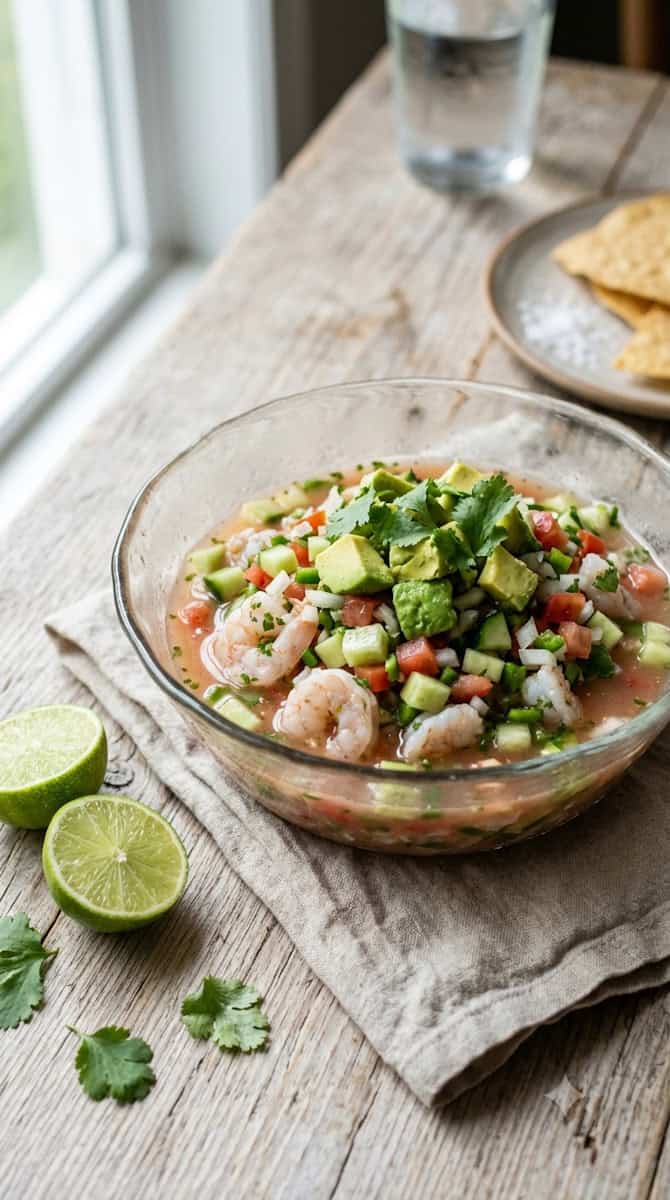
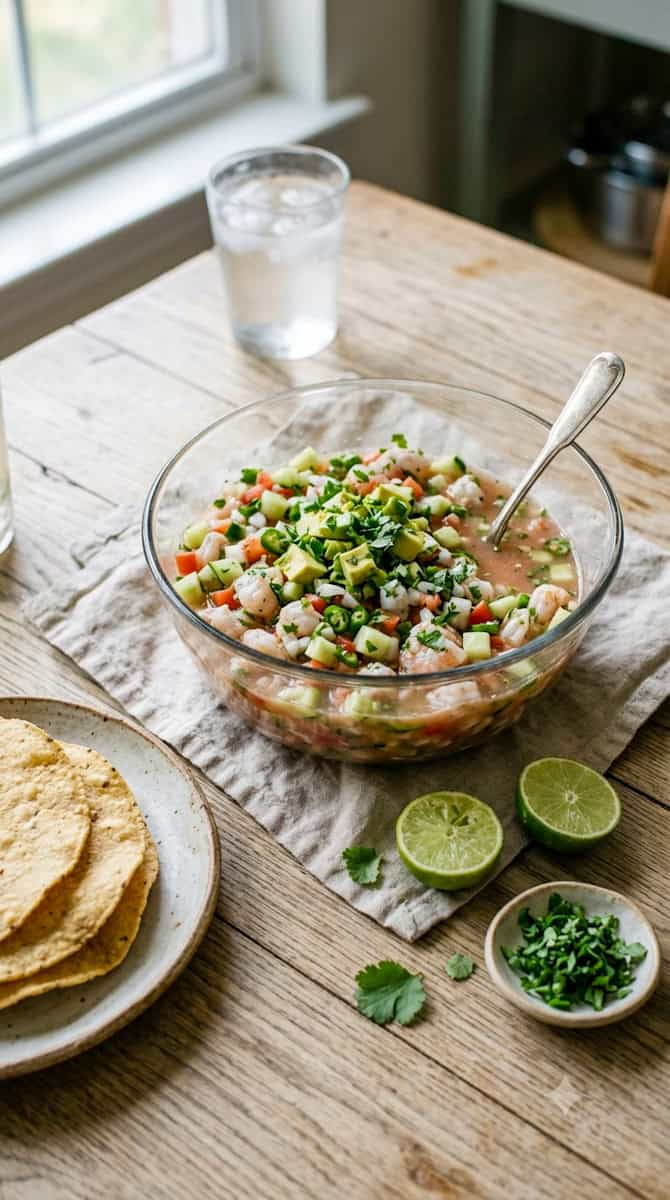
This shrimp ceviche is made with cooked shrimp, fresh lime juice, Clamato, cucumber, tomato, avocado, cilantro, and jalapeño or serrano peppers. It’s cold, fresh, a little spicy, and really good piled onto a crispy tostada.

I use cleaned, fully cooked shrimp here, so there is no waiting for lime juice to “cook” anything. Just chop the vegetables, mix everything together, and let it chill. This is exactly the kind of recipe I want when it’s hot outside and turning on the oven feels offensive.
You can use frozen cooked shrimp, shrimp from the seafood counter, or quickly parboil raw shrimp yourself. All three work. Just make sure the shrimp are fully cooked and well-drained before adding them to the bowl.
Why You’ll Love This Recipe
- No raw seafood: This is a cooked shrimp ceviche, so you don’t have to rely on lime juice to cure raw shrimp.
- Really easy: Most of the work is chopping the vegetables. After that, everything goes into one bowl.
- Fresh with a little heat: Lime, cilantro, cucumber, and tomato keep it fresh while serrano or jalapeño adds a nice kick.
- Easy to adjust: Add more lime, another pepper, or an extra splash of Clamato. You can absolutely make it your own.
- Made for tostadas: The shrimp, vegetables, and tomato-lime broth are so good spooned over something crispy.
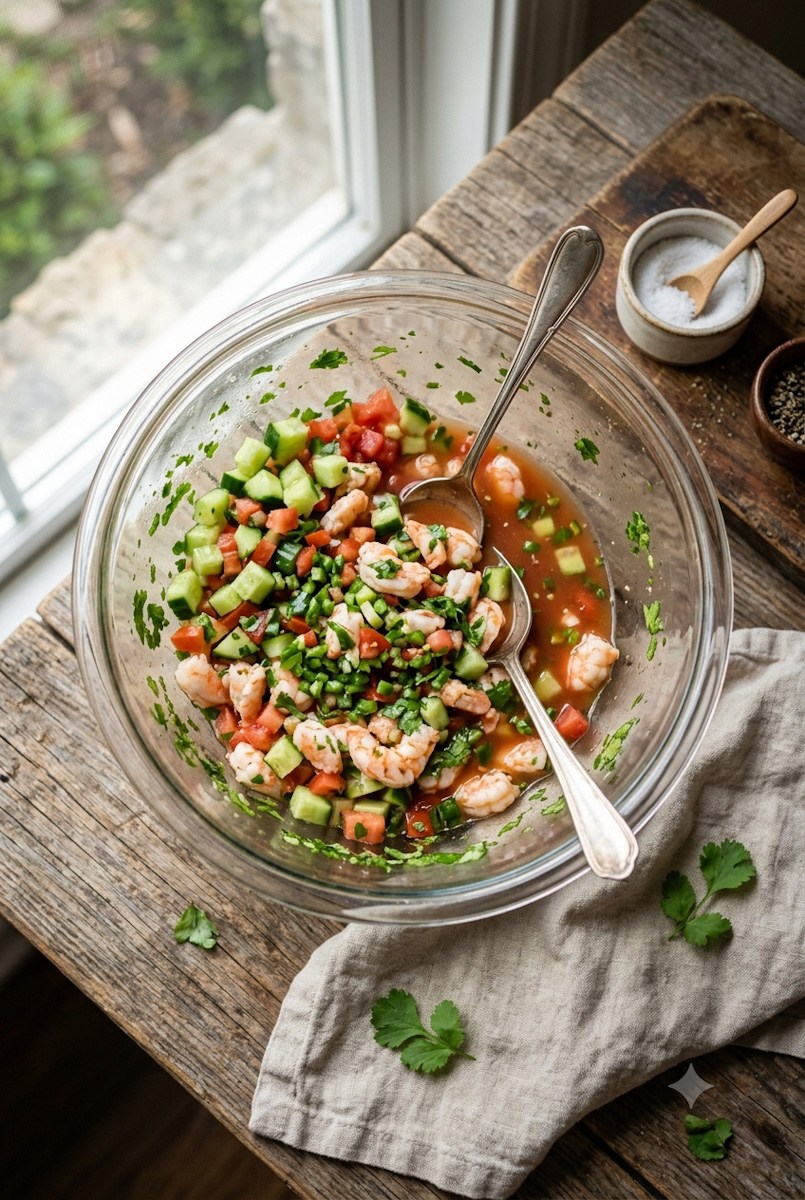
Is Shrimp Ceviche Made with Raw or Cooked Shrimp?
Ceviche is traditionally made by marinating raw seafood in citrus juice. The acid changes the proteins in the seafood, making it firmer and more opaque. However, lime juice does not kill every potentially harmful microorganism in the same way that cooking with heat does.
For this easy shrimp ceviche recipe, I start with fully cooked shrimp. It’s faster, easier, and removes the guesswork. The cooked shrimp still absorb plenty of flavor from the lime, onion, peppers, and Clamato.
There are many regional versions of ceviche. This one is closer to a Mexican shrimp ceviche because it includes tomatoes, cucumber, chile peppers, cilantro, avocado, and Clamato. It also has some overlap with Mexican shrimp cocktail, especially if you add the optional ketchup. Honestly, there are worse problems to have.
Shrimp Ceviche Ingredients
You’ll only need a few simple ingredients to make this recipe. The exact measurements are listed in the recipe card below. Here’s an overview of what you’ll need:
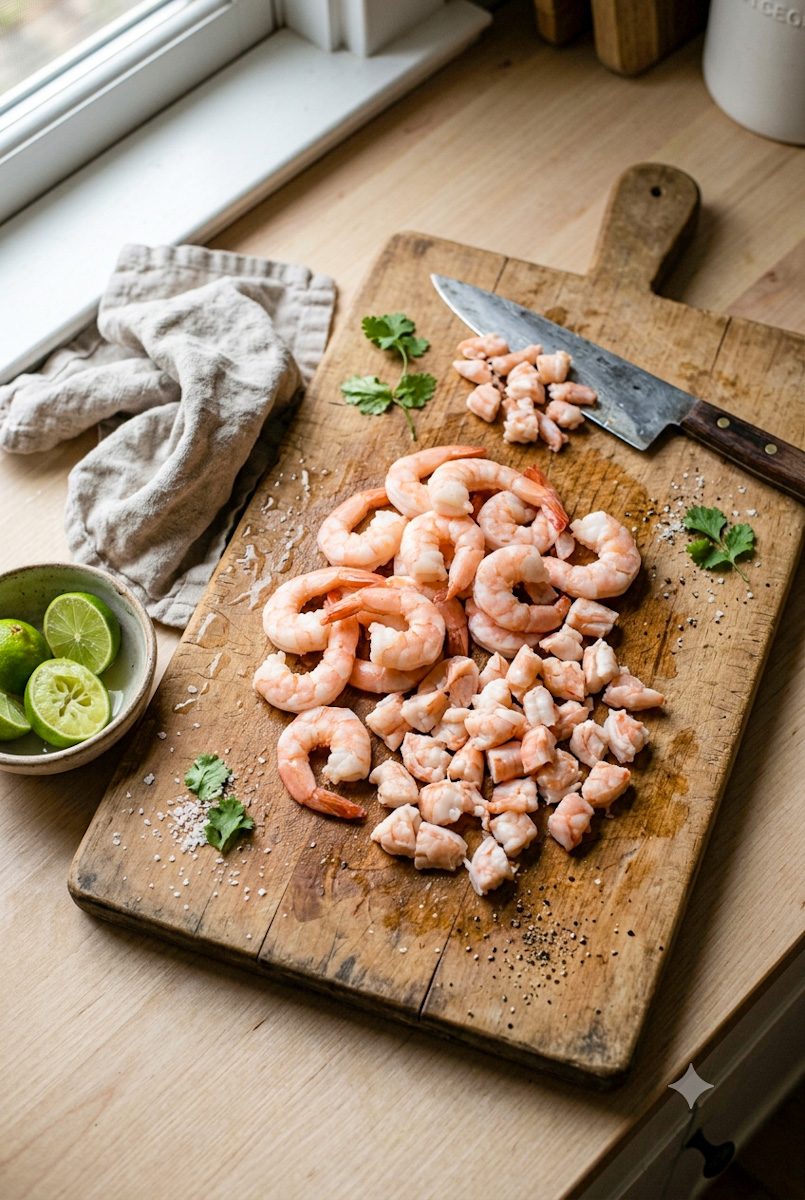
- Cooked shrimp: Use cleaned, peeled, and fully cooked shrimp with the tails removed. Small shrimp can stay whole, but I like chopping large shrimp into bite-size pieces so every scoop has a little bit of everything.
- Lime juice: Use freshly squeezed lime juice. I start with ½ cup, but keep another lime nearby in case you want more.
- Cucumber: Cucumber adds crunch and keeps the ceviche really fresh. Seed it if the center is especially watery. English or Persian cucumbers also work.
- White onion: Finely dice the onion so it doesn’t take over the entire bowl. If raw onion tastes too sharp, soak it in cold water for 10 minutes, then drain it well.
- Tomatoes: Roma tomatoes are my first choice because they are firm and less watery than larger slicing tomatoes.
- Serrano or jalapeño peppers: Jalapeños are usually milder, while serranos have more heat. Use one of each if you can’t decide. I support it.
- Cilantro: Fresh cilantro gives the ceviche a ton of flavor. You can use the tender upper stems too.
- Clamato: Clamato creates the light tomato-based broth. V8 works if that is what you have, although it won’t have quite the same savory, briny flavor.
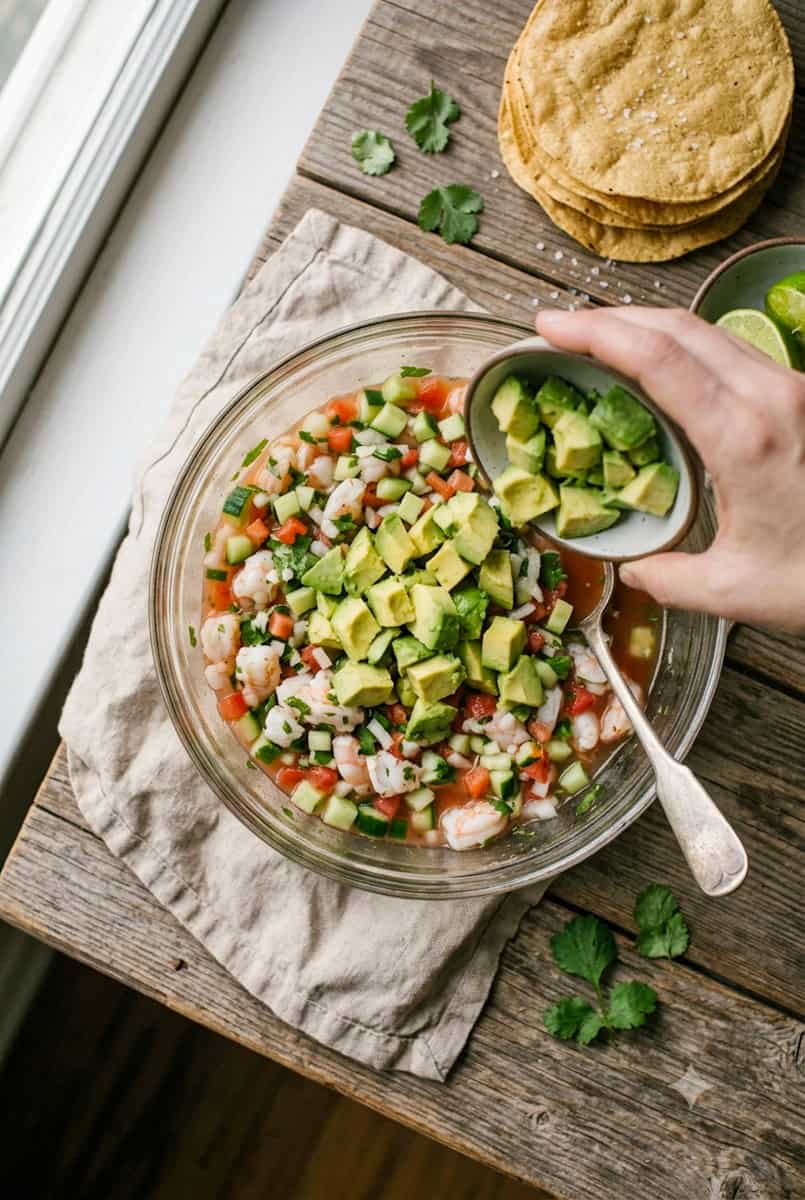
- Avocado: Avocado makes the ceviche creamy without adding an actual creamy dressing. Add it shortly before serving so it stays green and holds its shape.
- Ketchup: This is optional. It adds a little sweetness and makes the broth taste more like Mexican shrimp cocktail. Start with one tablespoon and go from there.
I use a handheld citrus juicer to squeeze the limes because it gets out more juice without dropping a bunch of seeds into the bowl. You’ll need about ½ cup of fresh lime juice for this recipe, so it definitely makes the job faster.
How to Make Shrimp Ceviche
Step 1: Prepare the shrimp
Drain the cooked shrimp and pat them dry. Remove any remaining tails and cut larger shrimp into bite-size pieces.
If you’re using frozen cooked shrimp, thaw them completely in the refrigerator first. Drain them really well so excess water doesn’t dilute the lime juice and Clamato.
Step 2: Add the lime and onion
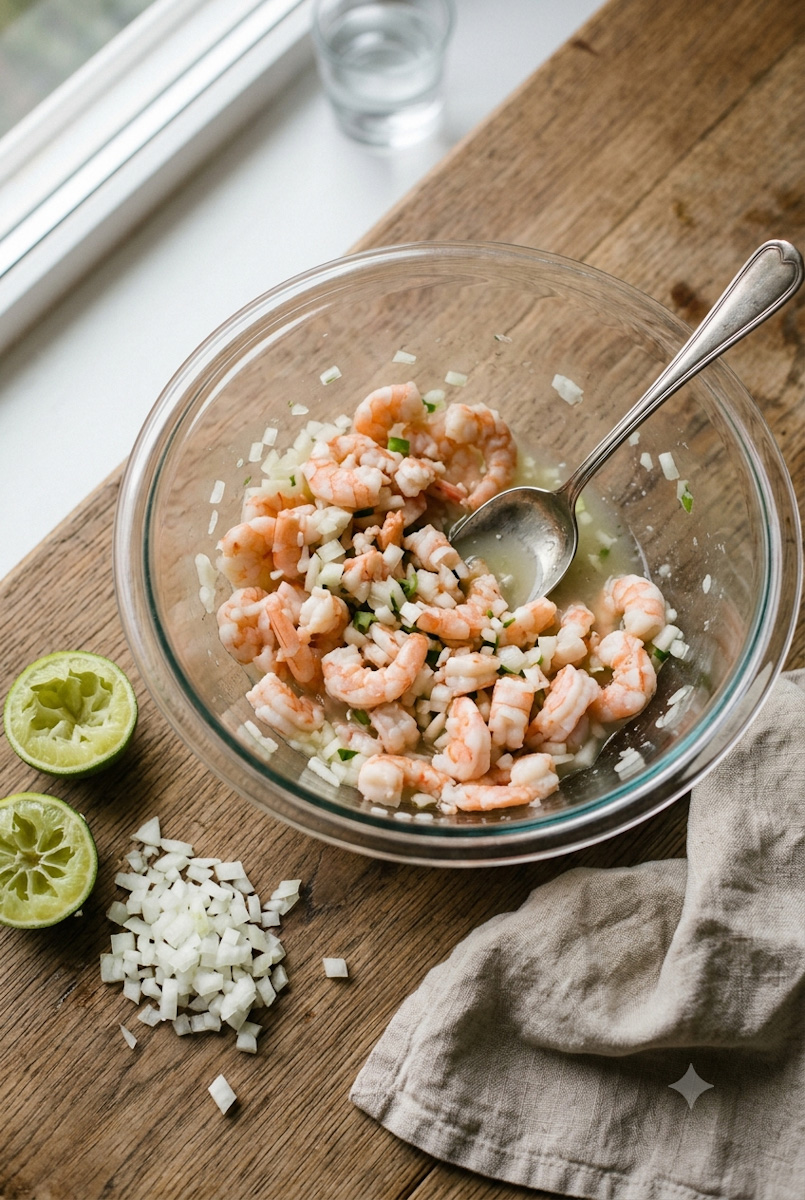
Place the shrimp in a large bowl with the lime juice and finely diced white onion. Toss well and refrigerate while you prepare the remaining ingredients, about 10–15 minutes.
The shrimp are already cooked, so this step is only for flavor.
Step 3: Add the vegetables
Add the cucumber, tomatoes, peppers, cilantro, and Clamato. Season with salt and black pepper.
If you’re using ketchup, start with one tablespoon. Stir everything together, taste it, and add the second tablespoon if you want a slightly sweeter broth. Cover the bowl and refrigerate the ceviche for about 20 minutes. This gives all those vegetables, peppers, and lime juice time to get acquainted.
Step 4: Add the avocado
Gently fold in the diced avocado shortly before serving. Taste the ceviche and add more lime juice, salt, black pepper, or chopped peppers as needed.
Serve it cold with tostadas, tortilla chips, or saltine crackers.
How to Parboil Raw Shrimp for Ceviche
If you’re starting with raw shrimp, bring a pot of salted water to a gentle boil. Add 1 pound of peeled and deveined shrimp and cook for 2–3 minutes, until they are pink and completely opaque.
Immediately transfer the shrimp to a bowl of ice water. This stops the cooking and helps keep them tender. Once they are cold, drain them and pat them completely dry.
Although this is often called parboiling, the shrimp should be fully cooked—not partially cooked—before you add them to this recipe.
Top Tip
Do not overcook the shrimp. Properly cooked shrimp form a loose “C” shape. If they curl into a tight “O,” they may be overcooked and rubbery.
Get them into the ice bath as soon as they are opaque. Shrimp cook fast. Very fast.
Substitutions
- Clamato: Use regular or spicy Clamato. V8 tomato juice also works, although it doesn’t have the same briny flavor.
- White onion: Red onion is a good substitute and adds more color. It can have a stronger flavor, so soak it in cold water first if needed.
- Serrano peppers: Use jalapeños for a milder ceviche. Remove the seeds and white ribs if you want even less heat.
- Roma tomatoes: Cherry or grape tomatoes work too. Quarter or finely chop them before adding.
- Cilantro: Cilantro gives the ceviche its signature flavor. If you absolutely cannot do cilantro, use flat-leaf parsley, knowing the finished recipe will taste different.
- Ketchup: Leave it out for a brighter, more lime-forward ceviche.
Shrimp Ceviche Variations
- Make it spicier: Use serrano peppers with the seeds or add a few dashes of your favorite Mexican hot sauce.
- Add mango: Diced mango adds a little sweetness that works really well with the lime and serrano.
- Add more seafood: Mix in cooked crab, scallops, octopus, or firm white fish.
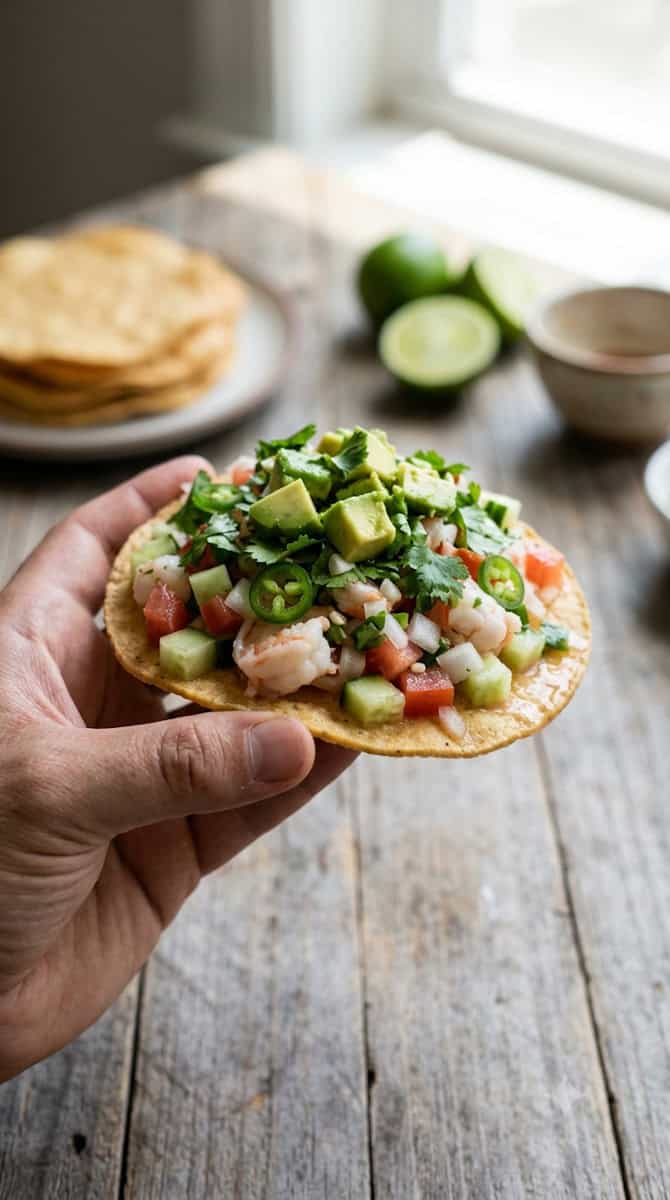
- Make shrimp ceviche tostadas: Spread a thin layer of mayonnaise or mashed avocado over a tostada, then spoon the ceviche on top.
- Skip the tomato juice: Leave out the Clamato and add more lime juice. This version will be less brothy and much more citrus-forward.
What to Serve with Shrimp Ceviche
I usually serve shrimp ceviche with crispy corn tostadas or sturdy tortilla chips. Saltine crackers are also really good because they soak up some of the spicy tomato-lime broth without falling apart immediately.
If you’re planning a larger seafood spread, serve it with my Shrimp Aguachile, Ahi Tuna Tostadas, or Ensenada Fish Tacos.
For another style of ceviche, try my Peruvian Ceviche with Leche de Tigre. That recipe uses fresh white fish with an entirely different marinade.
And obviously, a Tamarind Margarita would be such a good drink with this.
Make Ahead
You can prepare most of the ceviche a few hours ahead. Combine the shrimp, lime juice, onion, cucumber, tomato, peppers, cilantro, and Clamato, then cover and refrigerate.
Wait to add the avocado until shortly before serving. Otherwise, it can turn brown and become too soft in the liquid.
For the best texture, I would make this no more than four hours before serving. The cucumber and tomatoes will release more water the longer they sit.
How to Store Cooked Shrimp Ceviche
Store leftover ceviche in an airtight container in the refrigerator. It tastes best within one day because the vegetables and avocado soften as they sit.
Properly refrigerated leftovers can be stored for up to three days, but always use your judgment when storing seafood. Keep the ceviche at or below 40°F and refrigerate it within two hours of serving.
Do not freeze shrimp ceviche. The cucumber, tomatoes, cilantro, and avocado will lose their texture once thawed.
Frequently Asked Questions
Can I use frozen cooked shrimp?
Yes. Thaw the shrimp completely in the refrigerator, drain them, and pat them dry before adding the lime juice. Frozen cooked shrimp are actually one of the easiest options for this recipe.
Do I need to cook precooked shrimp again?
No. Precooked shrimp are ready to use once thawed. Cooking them again will probably make them rubbery.
How long should cooked shrimp sit in lime juice?
Cooked shrimp only need about 10–15 minutes in the lime juice to absorb flavor. They do not need to cure for several hours because they are already fully cooked.
Is this shrimp ceviche spicy?
It can be, but the heat is easy to adjust. Use one seeded jalapeño for a mild version or two serranos with the seeds for much more heat.
Can I make shrimp ceviche without Clamato?
Yes. Leave out the Clamato and add more lime juice as needed. The ceviche will have less liquid and a sharper citrus flavor.
Is shrimp ceviche the same as Mexican shrimp cocktail?
Not exactly, although there is plenty of overlap. Mexican shrimp cocktail usually has more tomato-based liquid and often contains ketchup or cocktail sauce. Ceviche tends to be more citrus-forward. This recipe lands somewhere in the middle because it includes plenty of lime and chopped ceviche-style ingredients along with Clamato.
Print
Shrimp Ceviche with Cooked Shrimp
- Total Time: 20 minutes
- Yield: 6 appetizer servings 1x
- Diet: Dairy-Free, Low-Carb, Pescatarian
Description
This easy shrimp ceviche is made with cooked shrimp, lime juice, Clamato, cucumber, tomato, avocado, cilantro, and spicy peppers.
Ingredients
- 1 pound cleaned, peeled, and fully cooked shrimp, thawed if frozen
- ½ cup freshly squeezed lime juice, from about 4–5 limes
- 1 medium cucumber, seeded and diced, about 1½ cups
- ⅓ cup finely diced white onion
- 2 Roma tomatoes, diced, about 1 cup
- 1–2 serrano or jalapeño peppers, finely chopped
- ⅓ cup finely chopped fresh cilantro
- 1 cup Clamato or V8 tomato juice
- ¼ teaspoon kosher salt, plus more to taste
- ¼ teaspoon freshly ground black pepper
- 1 ripe avocado, diced
- 1–2 tablespoons ketchup, optional
- Tostadas, tortilla chips, or saltine crackers, for serving
Instructions
- Drain the cooked shrimp and pat them dry. Remove the tails and cut large shrimp into bite-size pieces.
- Add the shrimp, lime juice, and white onion to a large bowl. Toss and refrigerate while preparing the remaining ingredients, about 10–15 minutes.
- Add the cucumber, tomatoes, peppers, cilantro, Clamato, salt, black pepper, and ketchup, if using. Stir well.
- Cover and refrigerate for 20 minutes.
- Gently fold in the avocado shortly before serving.
- Taste and add more lime juice, salt, or pepper as needed. Serve cold with tostadas, tortilla chips, or saltine crackers.
Notes
To cook raw shrimp yourself, bring salted water to a gentle boil. Add 1 pound of peeled and deveined shrimp and cook for 2–3 minutes, until pink and fully opaque. Transfer immediately to ice water, then drain and pat dry. Add the avocado shortly before serving so it stays green and holds its shape.
- Prep Time: 20 minutes
- Cook Time: 0 minutes
- Category: Appetizer
- Method: No Cook
- Cuisine: Mexican
Nutrition
- Serving Size: 1 cup
- Calories: 160 calories
- Sugar: 5 g
- Sodium: 450 mg
- Fat: 5 g
- Saturated Fat: 1 g
- Unsaturated Fat: 4 g
- Trans Fat: 0 g
- Carbohydrates: 11 g
- Fiber: 3 g
- Protein: 19 g
- Cholesterol: 150 mg
Leave a Reply