

These cuernitos pan dulce are soft, buttery Mexican croissants made with sourdough starter, yeast, and layers of melted butter. They’re lightly sweet, beautifully golden, and really good warm with coffee. Obviously.

Unlike a traditional French croissant, this cuernitos recipe doesn’t require you to shape a cold block of butter. Instead, melted butter is brushed over the dough between folds. This creates tender, buttery layers while keeping the process a little more approachable.
The dough needs to stay cool while you roll and fold it, so don’t skip the short trips to the refrigerator. That chilling time keeps the butter from disappearing into the dough and helps the baked cuernitos develop distinct layers.
Jump to:
- What Are Cuernitos Pan Dulce?
- Why You’ll Love This Recipe
- Cuernitos Pan Dulce Ingredients
- How to Make Cuernitos Pan Dulce
- Top Tip
- Substitutions
- Cuernitos Pan Dulce Variations
- What to Serve with Mexican Croissants
- Make Ahead Instructions
- How to Store Cuernitos
- Frequently Asked Questions About Mexican Cuernitos
- Cuernitos Pan Dulce (Mexican Croissants)
- Food safety
What Are Cuernitos Pan Dulce?
“Cuernitos” means “little horns” in Spanish, which describes the curved shape of these pastries. They’re a type of Mexican sweet bread shaped similarly to a croissant and commonly enjoyed with coffee, hot chocolate, or breakfast.
Mexican cuernitos can vary depending on the bakery and recipe. Some have a soft, bread-like texture, while others have more noticeable buttery layers. This version falls somewhere in the middle: fluffy and tender inside, with layers created by brushing the dough with melted butter and folding it several times.
Traditional French croissants are laminated with a cold butter block and require several carefully controlled folds. These Mexican croissants use a simplified method with melted butter. The result isn’t exactly the same as a French croissant, but it isn’t supposed to be.
Why You’ll Love This Recipe
- Buttery layers: Melted butter is brushed between the folds, giving the cuernitos a rich flavor and layered texture.
- Lightly sweet: There’s enough sugar to make them feel like pan dulce without turning them into dessert.
- Extra flavor from sourdough: The sourdough starter adds depth, while dry yeast provides a dependable rise.
- No traditional butter block: You still roll and fold the dough, but you don’t have to pound butter into a perfectly measured slab.
- So good with coffee: Serve them warm as they are, or add butter, jam, or a little honey.
Cuernitos Pan Dulce Ingredients
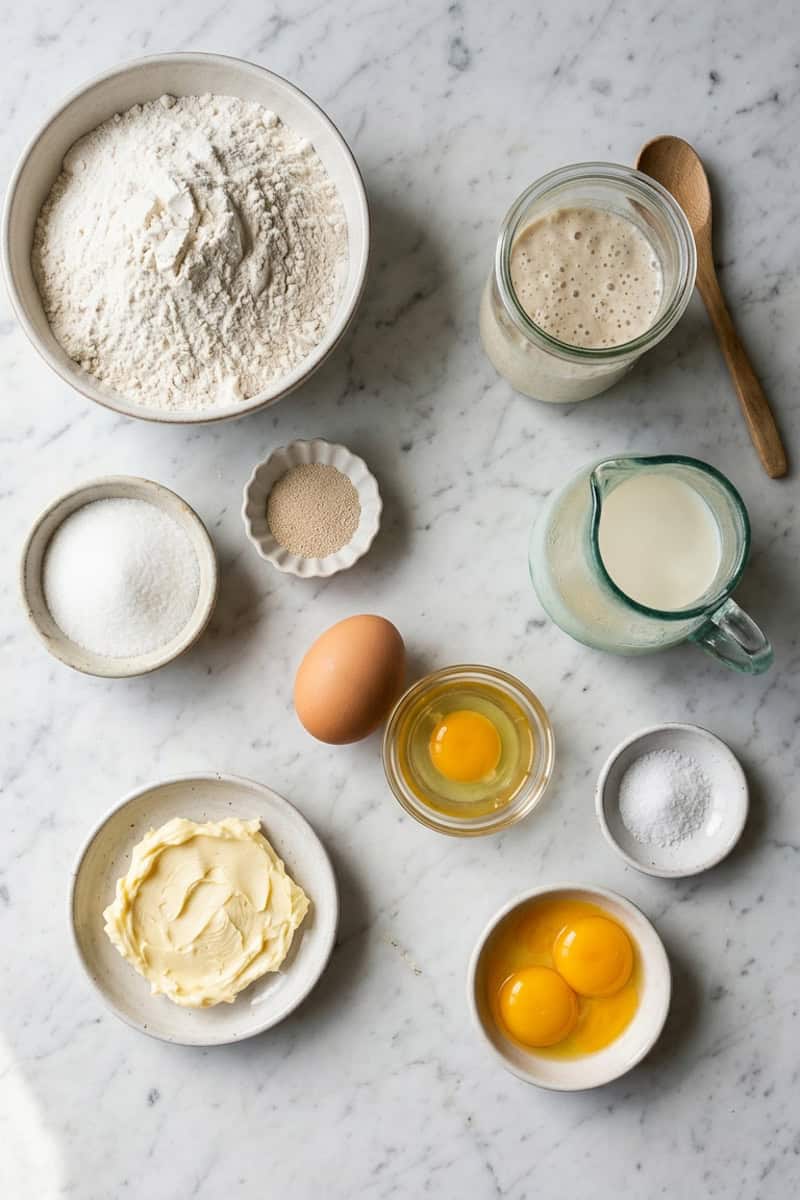
You’ll only need a few basic baking ingredients to make this recipe. The exact measurements are in the recipe card below. For the best results, use a kitchen scale and measure everything in grams.
- Bread flour: Bread flour gives the dough enough strength to hold the butter layers while still producing a soft interior.
- Dry yeast: Yeast provides the main lifting power. Make sure yours hasn’t been sitting in the back of the cabinet since 2019.
- Granulated sugar: The sugar lightly sweetens the dough and helps with browning. A smaller amount is added to the center of the flour at the beginning, followed by the remainder.
- Eggs: Eggs add richness, structure, and color.
- Sourdough starter: The starter contributes flavor and helps give the dough more character. This recipe still uses commercial yeast, so the rise doesn’t depend on the starter alone.
- Unsalted butter: Softened butter goes directly into the dough. An additional stick is melted and brushed between the layers.
- Milk and water: You can use milk, water, or a combination of both. Milk creates a richer dough, while water keeps it slightly lighter.
- Salt: Salt balances the sweetness and makes the buttery flavor stand out.
- Egg wash: Egg yolks, milk, and sugar create a shiny, deeply golden finish.
See recipe card for quantities.
How to Make Cuernitos Pan Dulce
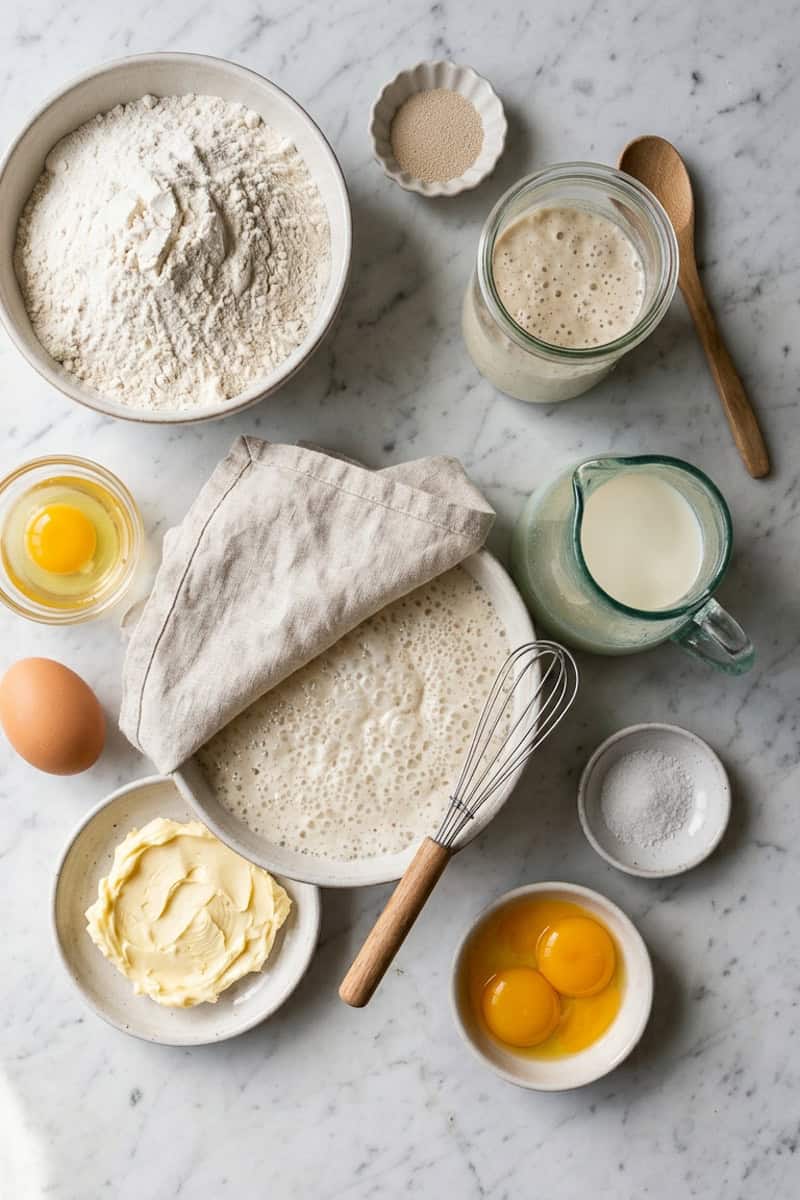
Place the bread flour in a large bowl and make a well in the center.
Add two tablespoons of sugar, the dry yeast, sourdough starter, and two tablespoons of the milk mixture to the well. Use your hands to gently mix the ingredients in the center, gradually incorporating some of the flour from around the edges.
You aren’t trying to mix in all the flour yet. Just work enough of it into the center to create a thick yeast mixture.
When the mixture in the center begins to feel dry, add the remaining sugar and milk mixture. Add the eggs, softened butter, and salt. Continue mixing until everything comes together into a rough dough. Transfer it to a clean work surface.
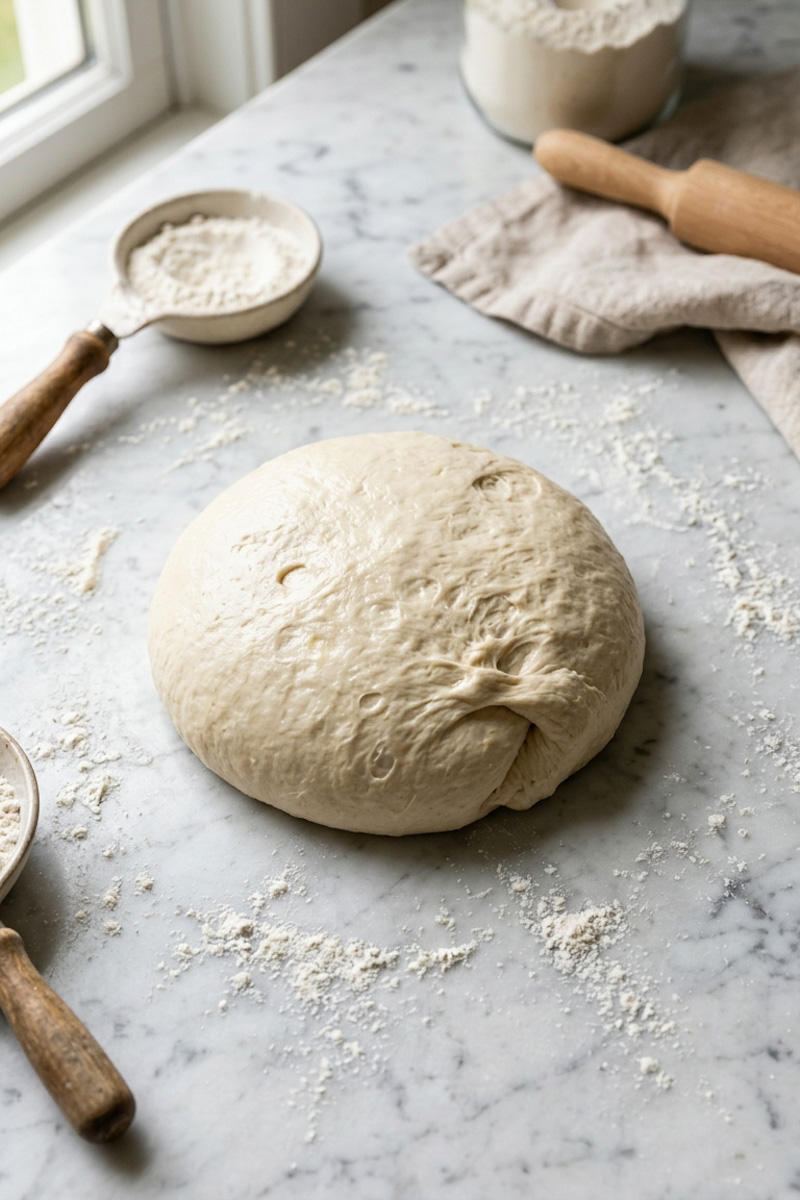
Knead the dough by hand for 15 to 20 minutes. It’s ready when it feels smooth, elastic, and no longer sticky.
Try not to add too much flour during this step. The dough may feel messy at first, but it should become smoother as you continue kneading.
You can also use a stand mixer fitted with the dough hook. Combine and knead the ingredients for approximately 10 minutes, stopping to scrape down the bowl if necessary.
Shape the dough into a ball and place it seam-side down in a lightly greased bowl. Cover the bowl tightly with plastic wrap and refrigerate for one hour.
The dough needs to remain cool and shouldn’t rise significantly during this period. This rest firms the butter in the dough and makes it easier to roll.
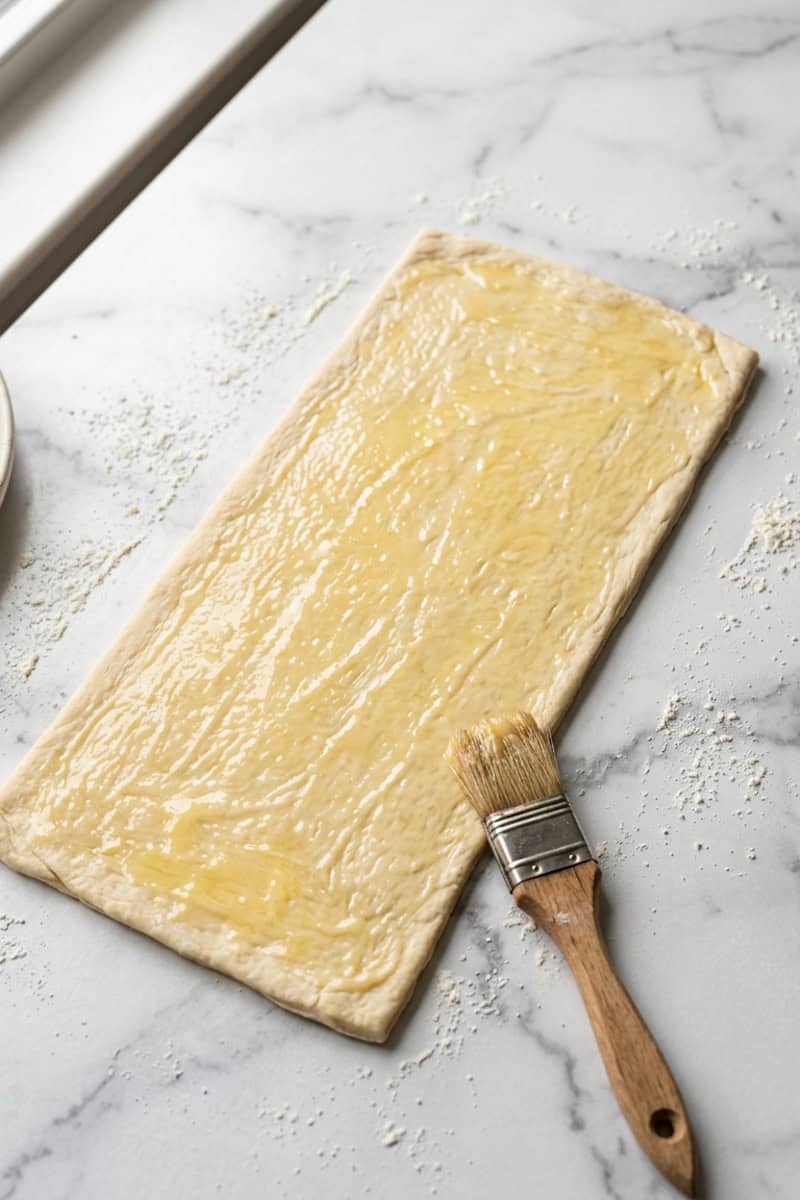
Transfer the chilled dough to a lightly floured work surface. Roll it into a long rectangle approximately 12 inches in length, keeping the sides as straight and parallel as possible. Lift the dough occasionally to make sure it isn’t sticking to the work surface. If you notice any large air bubbles, gently pierce them with your fingers or the tip of a knife.
Lightly flour a baking sheet, place the rolled dough on it, and refrigerate for 15 minutes. Melt the additional stick of butter and let it cool slightly. It should remain liquid but shouldn’t feel hot.
Return the chilled dough to a lightly floured surface and roll it into an even rectangle with straight sides. Brush some of the melted butter evenly over the surface. Let the butter cool and begin to set before folding. If the butter is still hot or completely liquid, it can run out as you fold the dough.
Fold one short side of the dough inward so it reaches the center. Fold the opposite side completely over the first section, creating a letter-style fold. Keep the edges lined up as neatly as possible. This helps create more even layers later.
Roll the folded dough into another 12-inch-long rectangle. Brush it with another even layer of melted butter and allow the butter to cool slightly. Repeat the letter-style fold, then refrigerate the dough for another 15 minutes.
Keeping both the dough and butter cool is important. If the dough becomes warm, soft, or greasy at any point, put it back in the refrigerator before continuing. Roll the chilled dough into a rectangle approximately 16 inches long and eight inches wide.
Lightly dust the dough and work surface with flour as needed to prevent sticking. Instead of pressing straight down with the rolling pin, gently roll the dough toward and away from you. This helps maintain even layers. Try to keep the thickness consistent from the center of the rectangle to the edges.
Use a ruler and a long, sharp knife to trim the edges into a neat 16-by-8-inch rectangle.
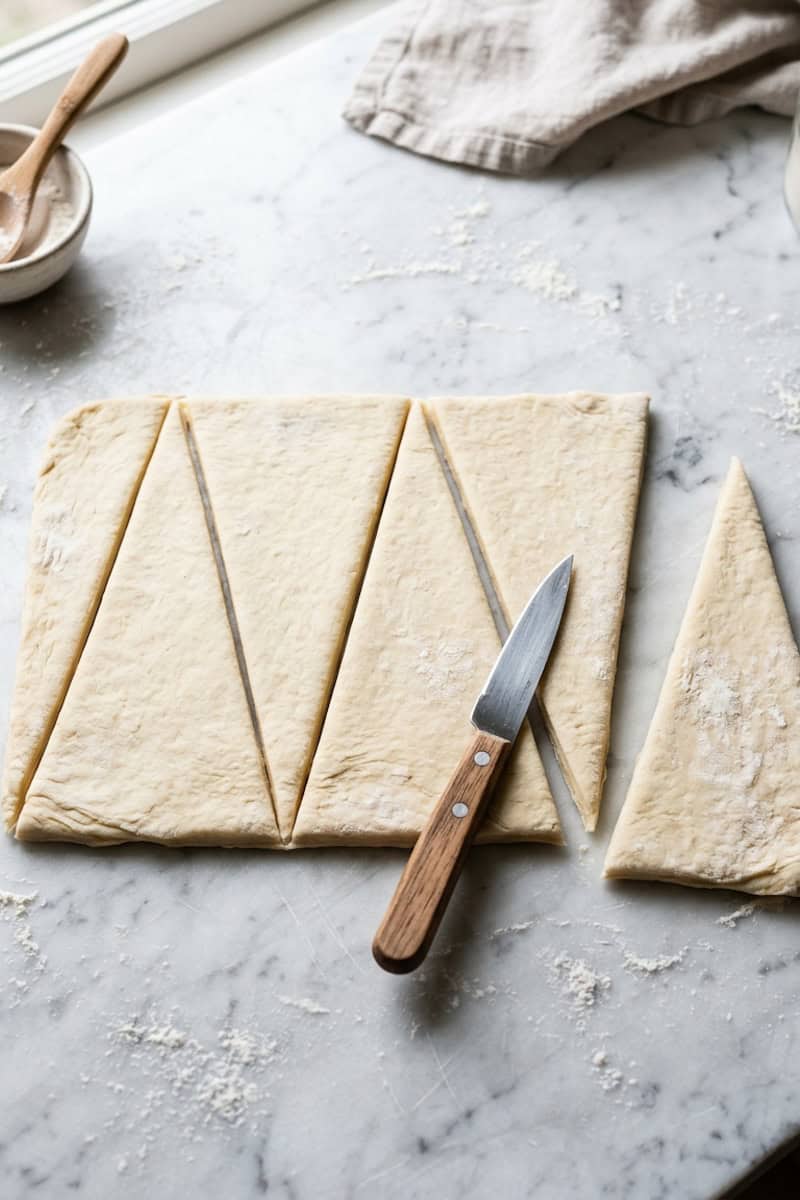
Cut the rectangle crosswise into four equal pieces. Each smaller rectangle should measure approximately four by eight inches.
Cut each rectangle diagonally from one corner to the opposite corner. You should now have eight long triangles.
Working with one triangle at a time, gently stretch the short end until the base measures approximately four inches wide.
Carefully lengthen the triangle by tugging it from the base toward the point. Be gentle so you don’t tear the dough or crush the butter layers.
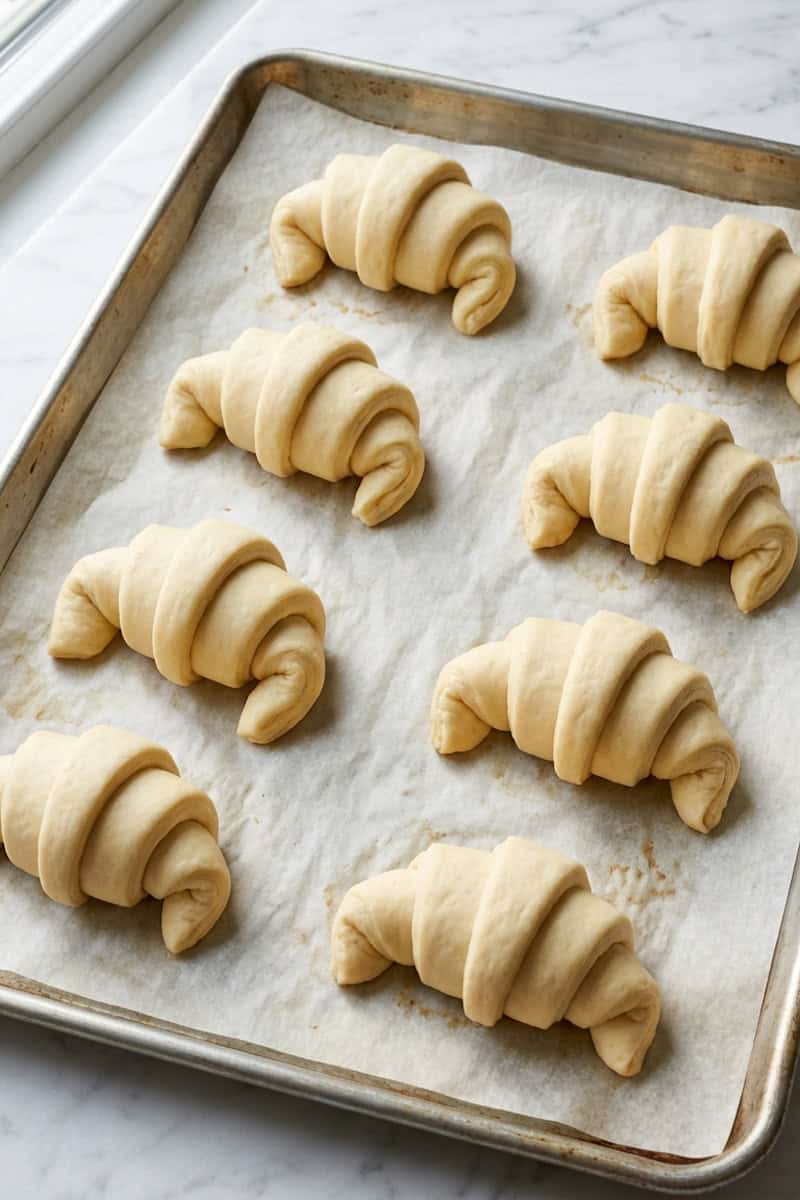
Beginning at the wide end, roll the triangle toward the point using light, even pressure. Keep the point centered as you roll.
Curve the ends inward to make the traditional crescent or horn shape. Place the cuernito seam-side down on a parchment-lined baking sheet so it doesn’t unroll in the oven.
Repeat with the remaining triangles.
Cover the shaped cuernitos loosely and let them rise for approximately 30 minutes.
They should look slightly fuller and feel lighter, but they may not double in size. Don’t leave them somewhere excessively warm—the butter needs to remain inside those layers instead of melting onto the baking sheet.
Whisk the egg yolks, milk, and sugar together until smooth.
Brush a thin, even coating over each pastry. Be gentle so you don’t deflate the dough, and avoid letting the egg wash collect around the bottoms.
Preheat the oven to 350°F.
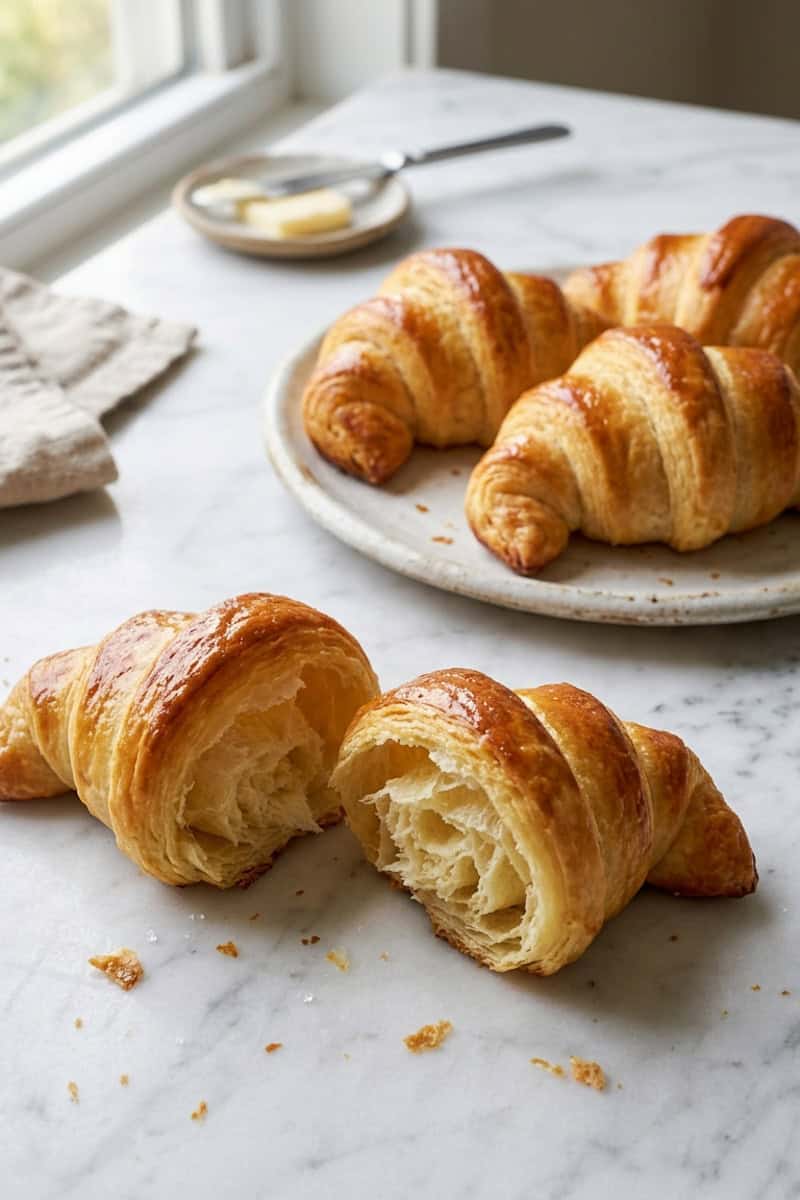
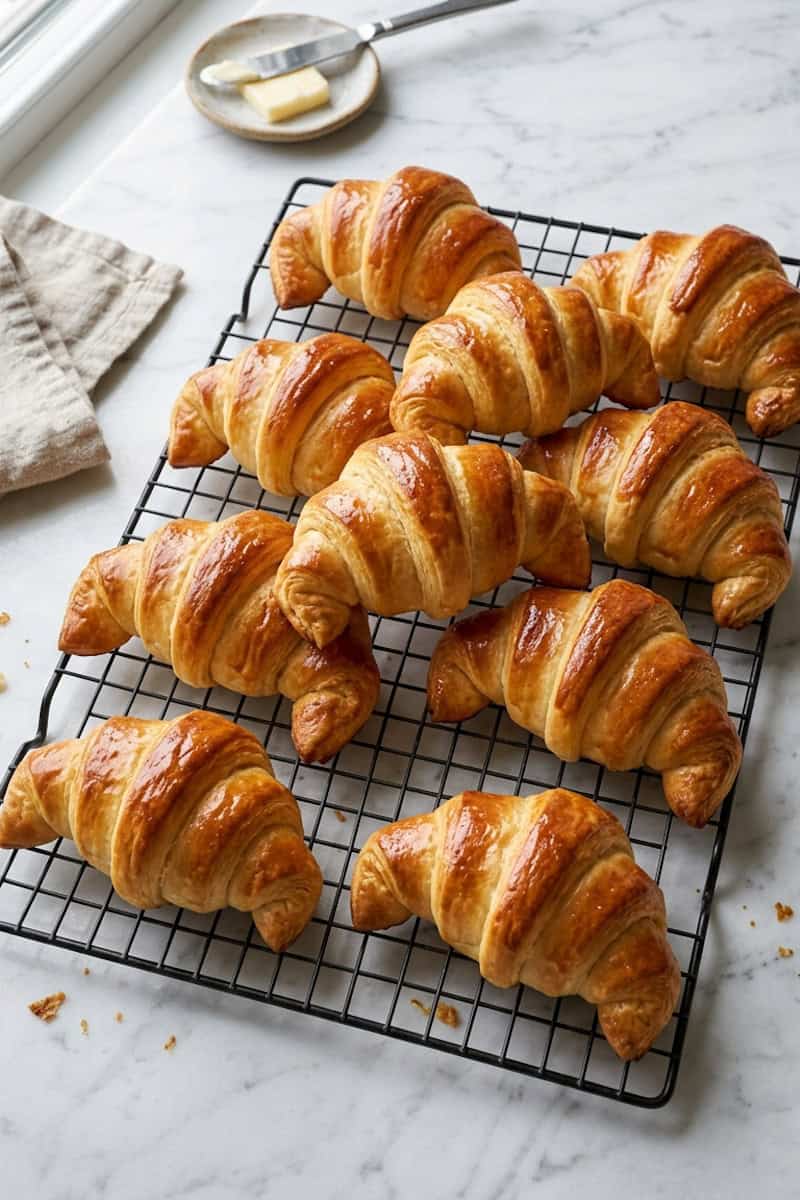
Bake the cuernitos for 15 to 20 minutes, until they’re puffed and evenly golden brown. Start checking them at 15 minutes because the sugar in the egg wash can make them brown quickly.
Let the pastries cool on the baking sheet for a few minutes before serving.
Top Tip
Keep the dough cool throughout the rolling and folding process.
If the dough starts feeling soft or the butter begins leaking, stop and refrigerate it for 10 to 15 minutes. Trying to push through warm dough will cause the butter to blend into it instead of staying between the layers.
The refrigerator is doing actual work here. Let it.
Substitutions
- All-purpose flour: You can use all-purpose flour if you don’t have bread flour, but the dough may feel softer and the finished pastries may have less structure.
- Instant yeast: Instant yeast can replace dry yeast in the same quantity.
- Milk or water: Either one works. Milk produces a richer and more tender pastry. Water makes the dough a little lighter. I like using a combination of both.
- Salted butter: Salted butter can work if necessary. Reduce the added salt slightly so the dough doesn’t become too salty.
- No sourdough starter: I don’t recommend simply leaving it out. Removing the starter changes both the flour and liquid content of the dough, so the remaining measurements would also need to be adjusted.
Cuernitos Pan Dulce Variations
Add vanilla
Mix one teaspoon of vanilla extract into the dough with the eggs and butter for a slightly sweeter bakery-style aroma.
Make cinnamon-sugar cuernitos
Brush the warm pastries with melted butter and sprinkle them with cinnamon sugar after baking.
Fill them with chocolate
Place a small amount of chopped chocolate near the wide end of each triangle before rolling. Keep the filling modest so it stays inside the pastry.
Add fruit preserves
Spread a very thin layer of thick jam over each triangle before rolling. Avoid watery preserves, which can leak and make the bottoms soggy.
Make savory cuernitos
Reduce the sugar slightly and add a narrow piece of ham and cheese near the base of each triangle. Roll and bake them the same way.
What to Serve with Mexican Croissants
These Mexican cuernitos are best served slightly warm with coffee or hot chocolate. You can eat them plain or add softened butter, jam, honey, or dulce de leche.
For a larger pan dulce spread, serve them with:
If you want a physical copy for your kitchen, write the recipe on a card and keep it in my Cilantro Parsley Recipe Card Box Set. Much easier than scrolling with butter all over your hands.

Make Ahead Instructions
You can prepare the dough through the final fold, cover it tightly, and refrigerate it overnight.
The next day, roll the chilled dough into the final 16-by-8-inch rectangle, cut and shape the pastries, and let them rise before adding the egg wash and baking.
You can also shape the cuernitos the night before. Arrange them on a parchment-lined baking sheet, cover tightly, and refrigerate. Let them sit at room temperature for approximately 30 to 45 minutes before baking, or until they look slightly fuller.
How to Store Cuernitos
Let the cuernitos cool completely before placing them in a container. Storing them while they’re warm traps moisture and softens the exterior.
Room temperature: Store the pastries in an airtight container for up to two days.
Freezer: Place completely cooled cuernitos in a freezer-safe container or bag and freeze for up to two months.
Reheating: Thaw frozen cuernitos at room temperature, then warm them in a 300°F oven for five to eight minutes.
Avoid refrigerating baked cuernitos unless necessary because refrigeration can make bread go stale faster.
Frequently Asked Questions About Mexican Cuernitos
Are cuernitos the same as French croissants?
No. Both pastries are rolled into triangles and shaped into crescents, but the preparation is different. Traditional French croissants are laminated with a cold butter block. This recipe brushes melted butter between folded layers of enriched dough.
Are cuernitos considered pan dulce?
Yes. Cuernitos are a type of Mexican sweet bread. They’re generally less sweet than conchas and many other varieties of pan dulce.
Why does this cuernitos recipe use sourdough starter and yeast?
The sourdough starter contributes flavor, while the dry yeast provides a stronger and more predictable rise. The finished pastries shouldn’t taste noticeably sour.
Why does the dough need to stay cold?
Cold dough keeps the butter layers separate. If the dough becomes too warm, the butter can soak into it or leak out, giving you fewer visible layers.
Can I use melted butter while it’s still hot?
No. Let the butter cool slightly before brushing it over the dough. Hot butter can warm the dough, affect the yeast, and disappear into the layers.
Why is butter leaking from my cuernitos?
The dough or butter probably became too warm during shaping or proofing. Chill the dough whenever it feels soft or greasy, and don’t proof the shaped pastries in an excessively warm area.


Cuernitos Pan Dulce (Mexican Croissants)
- Total Time: 3 hours
- Yield: 8 pastries 1x
- Diet: Vegetarian
Description
These cuernitos pan dulce are soft, buttery Mexican croissants made with sourdough starter, yeast, and layers of melted butter. Serve them slightly warm with coffee or hot chocolate.
Ingredients
For the Dough
- 4¼ cups (500 g) bread flour, plus more for dusting
- 1 tablespoon (10 g) dry yeast
- ⅓ cup plus 1 tablespoon (75 g) granulated sugar, divided
- 2 large eggs
- ⅓ cup plus 1 tablespoon (90 g) sourdough starter
- ⅓ cup plus 1½ teaspoons (80 g) unsalted butter, softened
- 1⅓ teaspoons (8 g) salt
- 1 cup (240 g) milk, water, or a combination of both, divided
For the Butter Layers
- ½ cup (1 stick or 113 g) unsalted butter, melted and cooled slightly
For the Egg Wash
- 2 egg yolks
- 3 tablespoons plus 1 teaspoon (50 ml) milk
- 2 tablespoons granulated sugar
Instructions
- Place the flour in a large bowl and make a well in the center. Add two tablespoons of sugar, the yeast, sourdough starter, and two tablespoons of the milk mixture to the well. Mix the ingredients in the center, gradually incorporating some of the surrounding flour.
- When the mixture begins to feel dry, add the remaining sugar and milk mixture. Add the eggs, softened butter, and salt. Mix until a rough dough forms.
- Transfer the dough to a clean work surface and knead for 15 to 20 minutes, until smooth, elastic, and no longer sticky. Alternatively, knead it in a stand mixer fitted with the dough hook for approximately 10 minutes.
- Shape the dough into a ball and place it seam-side down in a lightly greased bowl. Cover tightly and refrigerate for one hour. The dough should remain cool and shouldn’t rise significantly.
- Transfer the chilled dough to a lightly floured surface. Roll it into a long rectangle approximately 12 inches in length, keeping the sides straight and parallel. Lift the dough occasionally to prevent sticking and gently pierce any air bubbles.
- Place the rolled dough on a lightly floured baking sheet and refrigerate for 15 minutes.
- Melt the additional stick of butter and let it cool slightly. Return the dough to a floured surface and roll it into an even rectangle. Brush some of the melted butter evenly over the dough and let it begin to set.
- Fold one short side inward to the center. Fold the opposite side completely over the first to make a letter-style fold.
- Roll the folded dough into another 12-inch rectangle. Brush it with another layer of melted butter and let the butter cool slightly. Repeat the letter-style fold and refrigerate for 15 minutes.
- Roll the chilled dough into a rectangle approximately 16 inches long and eight inches wide. Lightly flour the dough and work surface as needed.
- Trim the edges to create a neat 16-by-8-inch rectangle. Cut it crosswise into four equal 4-by-8-inch rectangles.
- Cut each smaller rectangle diagonally from one corner to the opposite corner, creating eight triangles.
- Working with one triangle at a time, stretch the short end until the base is approximately four inches wide. Gently lengthen the triangle from its base toward the point.
- Roll the triangle from the wide end toward the point, keeping the point centered. Curve the ends inward and place the pastry seam-side down on a parchment-lined baking sheet. Repeat with the remaining dough.
- Cover the shaped cuernitos loosely and let them rise for approximately 30 minutes.
- Whisk the egg yolks, milk, and sugar until smooth. Brush a thin, even coating over each pastry.
- Preheat the oven to 350°F (175°C). Bake for 15 to 20 minutes, until puffed and golden brown. Begin checking them at 15 minutes.
- Let the cuernitos cool on the baking sheet for a few minutes before serving.
Notes
Measure the ingredients by weight for the most consistent results.
Keep the dough cool while rolling and folding.
Let the melted butter cool slightly before brushing it onto the dough.
Chill the dough if it becomes soft or greasy.
Use light pressure when rolling to preserve the butter layers.
Keep the point of each triangle underneath the pastry so it doesn’t unroll while baking.
Oven temperatures vary, so begin checking the cuernitos after 15 minutes.
- Prep Time: 2 hours 40 minutes
- Cook Time: 20 minutes
- Category: Pastry, Snack
- Method: Baking
- Cuisine: Mexican
Food safety
- Cook to a minimum temperature of 165 °F (74 °C)
- Do not use the same utensils on cooked food, that previously touched raw meat
- Wash hands after touching raw meat
- Don't leave food sitting out at room temperature for extended periods
- Never leave cooking food unattended
- Use oils with high smoking point to avoid harmful compounds
- Always have good ventilation when using a gas stove

Jennifer C
Hello! I don’t have access to sourdough starter, any substitutions or could I leave it out? Thanks!
Maxine Dubois
You can absolutely make these without sourdough starter! Replace the 90 grams of starter with 45 grams of additional bread flour and 45 grams of additional milk or water. Keep the dry yeast amount the same. Add the liquid gradually since you may not need all of it—the dough should be soft and slightly tacky, but not wet.
Margarita
Hi i'm uncertain what the recipe means by dry yeast! Is it Active Dry Yeast, Instant Yeast, or a whole different type of yeast?
Maxine Ciampa
Active dry yeast