

This pan de muerto recipe makes soft, buttery Mexican sweet bread with orange zest, orange blossom water, and a sugar coating. The dough gets shaped into round loaves with little bone-shaped decorations on top. They look elaborate, but you’re really just working with dough balls and a few rolled strips.

I love the combination of citrus and butter here. The orange blossom water adds a light floral flavor, and brushing the warm bread with melted butter gives the sugar something to stick to. Obviously, that part matters.
Plan on an afternoon for this Day of the Dead bread. Most of that time is spent waiting for the dough to rise, so you don’t need to stand over it. Put on some coffee when it’s ready.
Jump to:
- What Is Pan de Muerto?
- Why You’ll Love This Recipe
- Pan de Muerto Ingredients
- How to Make Pan de Muerto
- My Top Tip
- Substitutions
- Pan de Muerto Variations
- What to Serve with Pan de Muerto
- Make Ahead and Storage
- Frequently Asked Questions About Day of the Dead Bread
- Equipment
- Pan de Muerto Recipe (Day of the Dead Bread)
- Food safety
What Is Pan de Muerto?
Pan de muerto means “bread of the dead.” It’s a Mexican sweet bread associated with Día de los Muertos, when families remember and honor loved ones who have died. It can be placed on an ofrenda and shared with family and friends.
There are regional versions with different shapes and finishes. This recipe makes the round, sugar-coated style with crossed dough decorations that resemble bones and a small ball on top.
If you enjoy making Mexican sweet breads, try my Mexican conchas next.
Why You’ll Love This Recipe
- Orange flavor throughout. Orange zest gives the dough its citrus flavor, while orange blossom water adds something a little more floral.
- A rich, soft crumb. Butter, eggs, and milk make this an enriched bread dough.
- Decorations you can shape by hand. No special cutter needed. A few strips of dough and a small ball make the topping.
- Two loaves from one batch. Keep one for your kitchen and share the other, or freeze it for later.
Pan de Muerto Ingredients
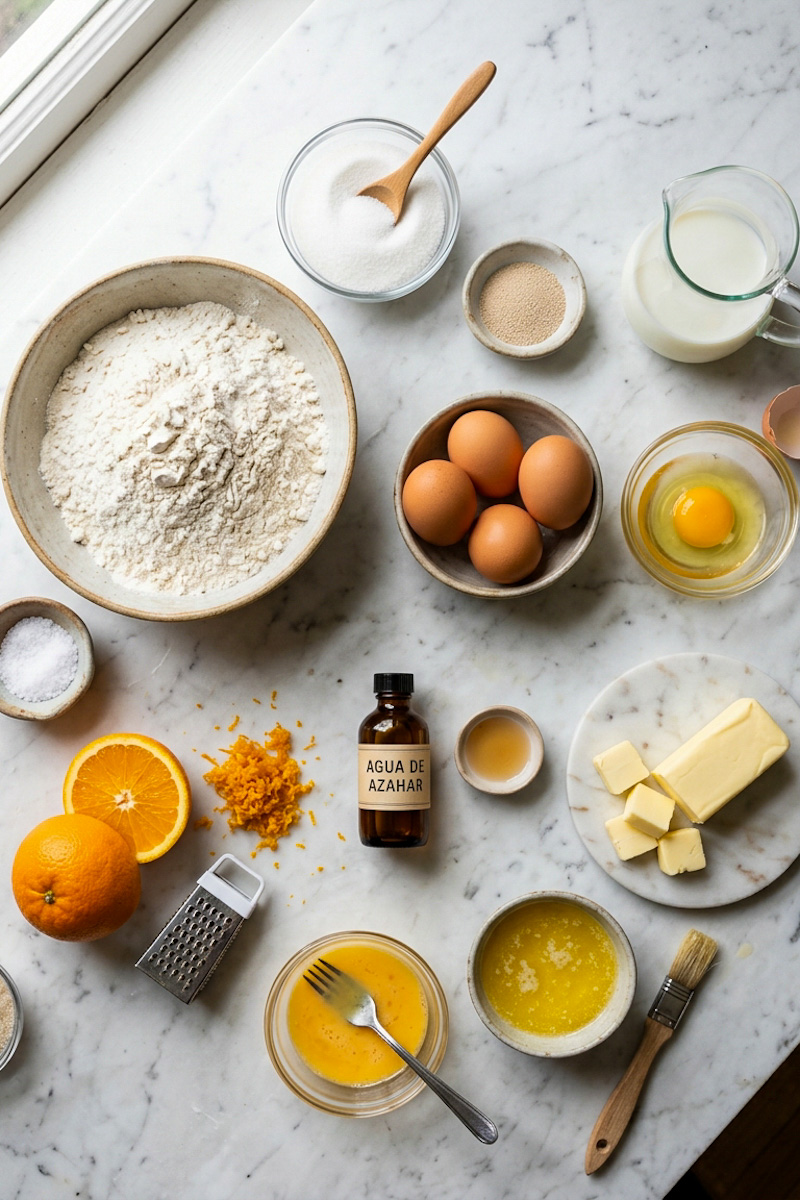
You’ll only need a few simple ingredients to make this recipe. The exact measurements are listed in the recipe card below. Here’s an overview of what you’ll need:
All-purpose flour: Weigh it if you can. Too much flour can make the bread heavier, and it’s easy to add more than you realize when measuring with cups.
Granulated sugar: You’ll use it in the dough and sprinkle more over the buttered loaves after baking.
Active dry yeast: This recipe uses active dry yeast. Check the expiration date before starting, especially if the package has been sitting in your pantry for a while.
Milk: Warm it gently. It should feel warm, not hot.
Eggs: These enrich the dough and help give the bread its color. Bringing them to room temperature keeps them from cooling down the warm milk.
Kosher salt: A little salt keeps the bread from tasting flat.
Orange zest: Zest the orange before cutting it, and avoid the white pith underneath the peel. That part tastes bitter.
Orange blossom water: Buy food-grade orange blossom water intended for cooking. A small amount adds fragrance without taking over the bread.
Butter: Use softened, diced butter for the dough so it’s easier to incorporate. You’ll also need melted butter for brushing the baked loaves.
Egg wash: A beaten egg, a pinch of sugar, and a little water help the surface brown.
See recipe card for quantities.
How to Make Pan de Muerto

Put the flour in a large bowl and make a well in the center. Add the sugar and active dry yeast to the well, then pour in the warm milk.
Gently move flour over the milk to cover the well. Cover the bowl and let it rest for 1 hour. Add the eggs, salt, orange zest, and orange blossom water. Mix until the ingredients come together, then transfer the dough to a lightly floured work surface.
Knead for about 10 minutes. Add the softened, diced butter gradually and knead for another 10 minutes, until incorporated and the dough is smoother and more elastic.
The dough may look messy as the butter goes in. Keep working it before reaching for more flour.

If using a stand mixer, use the dough hook on low speed. Mix the dough ingredients first, then gradually incorporate the butter. Use the dough’s texture as your guide rather than assuming it will be ready at an exact minute.
Return the dough to the bowl and cover. Let it rise in a warm spot for approximately 1–2 hours, until doubled in size.
A cooler kitchen can mean a longer rise. Look at the dough, not just the clock.

Grease two baking sheets or line them with parchment.
Divide the dough into three pieces. Shape two pieces into smooth, tight balls and place one on each baking sheet. Gently flatten them a little.
Keep the third piece covered for the decorations. Cover the loaves and let them rise for about 1 hour, until noticeably puffy.
Heat the oven to 350°F (175°C).
Divide the reserved dough into four strips and two balls, using all the reserved dough. Roll the strips long enough to cross the loaves. Use your fingers to make indentations along each strip so it resembles a row of little bones.
Beat the topping egg with a pinch of sugar and 1 tablespoon of water. Lightly brush the loaves with the egg wash.
Lay two strips across each loaf in an X, then place a dough ball in the center. Brush the decorations with egg wash.

Bake the large loaves for 35–45 minutes, until golden brown and baked through.
Check them during baking. If the tops are browning too quickly, loosely cover them with foil for the remaining time.
If you make individual buns instead, bake them at the same temperature for 16–25 minutes, depending on their size.
Transfer the bread to a wire rack. While it’s still warm, brush with melted butter and sprinkle with granulated sugar.
Let it cool enough for the crumb to set before cutting into it.
My Top Tip
Don’t keep adding flour just because the dough feels sticky. This dough contains butter, eggs, and milk, so it won’t feel like a lean bread dough. Give it time to come together as you knead, and use only enough extra flour to keep it manageable.
A kitchen scale helps here. Start with the correct flour weight, then judge the dough after the butter is fully incorporated.
Substitutions
No orange blossom water? Leave it out and keep the orange zest. The bread will still have citrus flavor, but you’ll lose the floral note. I wouldn’t replace it with extra orange juice because that changes the liquid in the dough.
Need a milk substitute? An unsweetened, unflavored nondairy milk is a reasonable option, although it may slightly change the flavor and browning. The recipe still contains butter and eggs.
I’d keep the all-purpose flour and butter as written for this version. Gluten-free flour and oil aren’t straightforward swaps in an enriched yeast dough.

Pan de Muerto Variations
You can change the finish without changing the dough formula:
- Cinnamon sugar: Mix a little ground cinnamon into the sugar used to coat the baked bread.
- Individual buns: Shape smaller rounds and add miniature dough decorations. Use the shorter baking time.
- Filled slices: Once the bread is cool, split a portion and add whipped cream or chocolate hazelnut spread just before serving. Store any perishable filling separately.
What to Serve with Pan de Muerto
Coffee, hot chocolate, or my champurrado would be my first choices. Champurrado is a thick chocolate drink, so a slice of citrus-scented bread alongside it makes a really good pairing.
For a larger spread of Mexican sweets, add orejas for something crisp and flaky, or Mexican buñuelos for a fried pastry.
And if this gets you into making more pan dulce at home, save my bigotes recipe for another baking day.
Make Ahead and Storage
This bread is best the day it’s baked, but you can make it a day ahead. Let it cool completely before wrapping it so you don’t trap steam inside.
Room temperature: Keep the unfilled bread tightly wrapped or in an airtight container for up to 2–3 days in a cool, dry kitchen.
Freezer: Wrap cooled loaves or individual portions tightly, then place them in a freezer bag. Freeze for up to 2 months for best quality. Thaw while wrapped at room temperature.
Reheating: Warm thawed bread in a 300°F oven, loosely wrapped in foil, until warmed through. Smaller portions will take less time than a whole loaf.
Frequently Asked Questions About Day of the Dead Bread
What does pan de muerto taste like?
This version tastes buttery and lightly sweet, with orange zest and a floral note from orange blossom water. The sugar coating adds sweetness to the outside.
Why didn’t my dough rise?
The yeast may be old, the milk may have been too hot, or the room may be too cold. If the dough is slowly expanding, give it more time. Enriched dough can rise more slowly than a basic flour-and-water dough.
Can I make pan de muerto without a stand mixer?
Yes. Knead it by hand, adding the softened butter gradually after the initial kneading. It takes some patience, but you don’t need a mixer.
Why is the outside brown while the middle is still underbaked?
Large loaves need more time for heat to reach the center. Loosely cover the tops with foil if they’re browning quickly, then continue baking. Surface color alone doesn’t tell you that the center is done.
Can I freeze pan de muerto?
Yes. Freeze it after it has cooled completely, wrapped tightly to protect it from drying out. Individual portions are useful if you only want to thaw a little at a time.
Equipment
A stand mixer with a dough hook makes incorporating the butter easier, although hand kneading works too. A digital kitchen scale is especially useful because the flour and butter amounts matter here.
If this becomes part of your yearly baking routine, my Cilantro Parsley Recipe Card Box Set gives you a place to keep a handwritten copy—and any notes you want to remember for next time.


Pan de Muerto Recipe (Day of the Dead Bread)
- Total Time: 4 hours 15 minutes–5 hours 25 minutes
- Yield: 2 large loaves 1x
- Diet: Vegetarian
Description
This pan de muerto recipe makes two buttery, orange-scented loaves with bone-shaped dough decorations and a coating of butter and sugar.
Ingredients
Dough
- 500 grams all-purpose flour (approximately 4 cups), plus extra for dusting
- 100 grams granulated sugar (½ cup)
- 1½ teaspoons active dry yeast
- 250 ml milk (approximately 1 cup plus 2 teaspoons), warmed
- 4 eggs
- 1 teaspoon kosher salt
- 1 tablespoon orange zest
- 1 teaspoon food-grade orange blossom water
- 200 grams butter (approximately ⅞ cup, or 14 tablespoons), softened and diced
Egg wash
- 1 egg, beaten
- Pinch of granulated sugar
- 1 tablespoon water
Finishing
- Melted butter, for brushing
- Granulated sugar, for sprinkling
Instructions
- Place the flour in a large bowl and make a well in the center. Add the sugar and yeast to the well, then pour in the warm milk. Gently move flour over the milk to cover the well. Cover the bowl and rest for 1 hour.
- Add the eggs, salt, orange zest, and orange blossom water. Mix until combined. Transfer to a lightly floured surface and knead for about 10 minutes.
- Gradually add the softened, diced butter and knead for another 10 minutes, until incorporated and the dough is smoother and more elastic. Alternatively, use a stand mixer with a dough hook on low speed, mixing the dough first and then gradually incorporating the butter.
- Return the dough to the bowl, cover, and let rise for approximately 1–2 hours, until doubled in size.
- Grease two baking sheets or line them with parchment. Divide the dough into three pieces. Shape two pieces into smooth balls, place one on each sheet, and flatten slightly. Keep the remaining dough covered. Cover the loaves and let rise for about 1 hour, until puffy.
- Preheat the oven to 350°F (175°C). Shape the reserved dough into four bone-shaped strips and two balls, using all the reserved dough.
- Beat the egg-wash egg with the pinch of sugar and water. Lightly brush the loaves. Cross two dough strips over each loaf in an X and place a dough ball in the center. Brush the decorations with egg wash.
- Bake for 35–45 minutes, until golden brown and baked through. Loosely cover with foil if the tops brown too quickly.
- Transfer to a wire rack. While warm, brush with melted butter and sprinkle with sugar. Let cool before slicing.
Notes
Gram measurements take precedence over approximate cup conversions.
For individual buns, bake at 350°F (175°C) for 16–25 minutes, depending on size.
Rising times vary with room temperature. Use the dough’s appearance as your guide.
Keep cooled, unfilled bread airtight at room temperature for up to 2–3 days, or freeze for up to 2 months.
- Prep Time: 4 hours
- Cook Time: 35 minutes
- Category: Dessert
- Method: Baking
- Cuisine: Mexican
Food safety
- Cook to a minimum temperature of 165 °F (74 °C)
- Do not use the same utensils on cooked food, that previously touched raw meat
- Wash hands after touching raw meat
- Don't leave food sitting out at room temperature for extended periods
- Never leave cooking food unattended
- Use oils with high smoking point to avoid harmful compounds
- Always have good ventilation when using a gas stove

Valerie Amato
Does this make 2 loaves? I'm a little confused with all the balls and strips how many I end up making.
Maxine Dubois
It makes 4-5!